
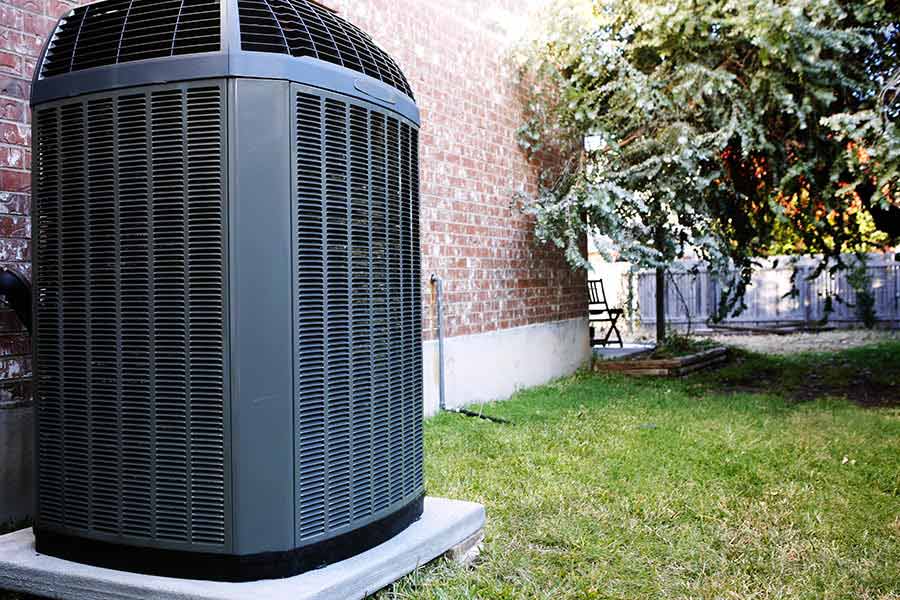
Few things are more frustrating than an air conditioner that appears to be running normally but leaves the house uncomfortably warm. The outdoor unit is humming, the air handler is blowing, and the thermostat is set where it always has been, yet the indoor temperature is not dropping the way it should. For Pittsburgh homeowners dealing with this situation, the good news is that the cause is almost always identifiable. The less welcome news is that most of the causes require professional diagnosis and repair rather than a simple homeowner adjustment.
In our service calls throughout Pittsburgh and the surrounding communities, calls from homeowners describing exactly this situation are among the most frequent we receive during the summer months. The humid conditions that define July and August in the Pittsburgh area, combined with the aging housing stock in neighborhoods like Shadyside, Bethel Park, and the South Hills, create a set of circumstances where HVAC performance issues surface regularly. Understanding what is most likely driving the problem helps homeowners communicate clearly with a technician and set appropriate expectations for what the diagnostic process will involve.
The System Is Low on Refrigerant
Refrigerant is the substance that makes cooling possible. It circulates through the sealed loop of the refrigerant circuit, absorbing heat from indoor air at the evaporator coil and releasing it outdoors at the condenser coil. When the refrigerant charge drops below the level the system was designed to operate at, its ability to absorb and transfer heat is diminished, and the cooling output the system can deliver drops accordingly.
A common misconception is that refrigerant is consumed over time like fuel and needs to be periodically topped off. In a properly functioning system, that is not the case. Refrigerant operates in a closed loop, and the only reason the charge drops is because refrigerant is escaping somewhere in that loop. Running without finding and repairing the leak first means the new charge will leak out over the same timeline as the previous one.
Low refrigerant produces several recognizable symptoms in addition to reduced cooling output. Ice forming on the refrigerant lines or on the evaporator coil, a hissing or bubbling sound from the line set or indoor unit, higher than normal humidity indoors, and longer than usual run cycles are all consistent with an undercharged system. A technician will measure the refrigerant pressures, identify the charge deficit, locate the source of the leak, repair it, and restore the system to the correct charge level.
The Evaporator or Condenser Coil Is Dirty
Both the evaporator coil inside the air handler and the condenser coil in the outdoor unit rely on clean surface contact with air to perform their heat exchange functions effectively. When those surfaces become coated with dust, dirt, pollen, or debris, they cannot transfer heat efficiently, and the system has to run longer to achieve the same result, often without fully reaching it.
Condenser coil fouling is particularly common in Pittsburgh during late spring and early summer when cottonwood, pollen, and airborne debris accumulate on the fins of the outdoor unit. Systems located near landscaping, downwind of dryer vents, or in areas with heavy tree cover tend to accumulate coil contamination faster than units in more open locations. A dirty condenser coil causes the system to operate at elevated head pressures, which reduces efficiency, increases wear on the compressor, and reduces cooling capacity.
A professional AC coil cleaning addresses both coil surfaces, restoring the heat transfer efficiency the system was designed to deliver. This service is one of the more impactful single-visit improvements available for a system that is running but underperforming, and it is typically included as part of a comprehensive maintenance visit.
The Air Filter Is Severely Restricted
A clogged air filter is one of the simplest causes of inadequate cooling and one of the most frequently encountered. When the filter becomes heavily loaded with dust and debris, it restricts the volume of air that can move across the evaporator coil. Reduced airflow means less heat is being pulled from the indoor air with each system cycle, and the cooling output drops as a result.
Beyond the direct impact on cooling performance, a severely restricted filter forces the blower motor to work harder than it was designed to, increasing energy consumption and accelerating motor wear. It also reduces the airflow across the evaporator coil to the point where the coil surface temperature can drop below freezing, causing moisture from the air to freeze on the coil rather than draining away as condensate. A frozen evaporator coil blocks airflow almost entirely and shuts down cooling output until the ice thaws.
Staying current on AC and furnace air filter replacement is one of the lowest-cost, highest-impact maintenance habits available to Pittsburgh homeowners. Most standard filters should be replaced every 30 to 90 days depending on the household environment, and homes with pets, older ductwork, or dusty conditions typically need more frequent changes.
The Thermostat Is Malfunctioning
A thermostat that is not reading the indoor temperature accurately or is not communicating properly with the air handler and outdoor unit can cause a system to appear to be running while producing inadequate cooling. If the thermostat is reading the indoor temperature as lower than it actually is, it will not call for enough cooling to maintain comfort. If it is failing to hold its setpoint, it may shut the system down prematurely before the space has been adequately cooled.
Thermostat issues are also easy to misattribute. A homeowner who notices the system running intermittently and the house not cooling properly may assume the compressor or refrigerant is at fault, when the actual problem is a thermostat sensor that has drifted or a wiring connection that has loosened over time. A technician can test thermostat calibration and communication as part of a diagnostic visit, which either confirms the thermostat is functioning correctly or identifies it as the source of the problem.
The placement of the thermostat also matters. Units located in direct sunlight, near heat-producing appliances, or in rooms that are cooler or warmer than the rest of the house will read an unrepresentative temperature and call for cooling based on inaccurate data. In Pittsburgh homes where older thermostats are still in service in original locations that were not optimally chosen, repositioning or replacing the thermostat can produce a meaningful improvement in system behavior.
The Ductwork Is Leaking or Undersized
In homes with forced-air systems, the duct network is responsible for delivering conditioned air to every room. When ducts develop leaks at joints, connections, or through deteriorated sealing, a portion of the conditioned air escapes into unconditioned spaces before reaching the living area. The system produces cooled air, but not all of it arrives at its intended destination, which leaves certain rooms or the house as a whole warmer than the thermostat setpoint.
Duct leakage is particularly common in Pittsburgh homes where ductwork runs through unconditioned attics, crawl spaces, or basement utility areas. Based on what we see throughout the South Hills, Mt. Lebanon, and Peters Township service area, duct systems that have never been inspected or sealed frequently leak 20 to 30 percent of their conditioned air volume into spaces that provide no benefit to the household.
Undersized ductwork presents a related problem. If the duct system was not designed to handle the airflow capacity of the current equipment, typically because the system was replaced with a higher-capacity unit without corresponding upgrades to the duct design, the restricted delivery network limits how effectively the system can cool the home regardless of how well the equipment itself is functioning. HVAC ductwork repair performed by a qualified technician can locate and seal leaks and assess whether the duct system is appropriately sized for the equipment it is serving.
The Compressor Is Struggling
The compressor is the component responsible for pressurizing refrigerant and driving it through the refrigerant circuit. A compressor that is operating below its design capacity due to age, wear, electrical deterioration, or developing mechanical failure will produce less cooling than the system was rated to deliver, even if every other component is functioning correctly.
A compressor that is hard starting, drawing excessive electrical current, or operating at incorrect pressures is a system that is delivering reduced cooling output and accumulating damage with each run cycle. Left unaddressed, a struggling compressor typically progresses to complete failure, at which point the repair decision becomes considerably more costly than it would have been if the problem had been evaluated and addressed earlier.
A technician performing an AC repair diagnostic will test compressor electrical readings, measure the pressure differential the compressor is producing, and assess amp draw against the nameplate rating. These tests identify whether the compressor is a contributing factor to the cooling shortfall and inform the decision about whether repair, component replacement, or full system evaluation is the appropriate next step.
The System Is Undersized for the Home
An air conditioner that is not adequately sized for the home it serves will never be able to maintain the setpoint temperature on the hottest days of the Pittsburgh summer, regardless of how well it has been maintained. An undersized system runs continuously at peak load without reaching the thermostat setpoint, which leads homeowners to conclude the system is malfunctioning when it is actually operating correctly but simply lacks the capacity to meet the demand.
This situation is more common than it might seem, particularly in Pittsburgh homes where system replacements have been made over the years without a proper load calculation to verify that the new equipment was correctly matched to the structure. Additions, finished basements, sunrooms, or changes to insulation and window glazing also alter the cooling load of a home and can leave an existing system undersized relative to current conditions.
A proper load calculation using Manual J methodology accounts for the square footage, ceiling heights, insulation levels, window area and orientation, occupancy, and local climate data to determine the correct equipment capacity for the home. If that calculation reveals the current system is undersized, an AC installation and replacement with correctly sized equipment will resolve the performance shortfall in a way that no amount of maintenance or repair on the existing unit can.

Getting Your Pittsburgh Home Comfortable Again
When an air conditioner is running but not cooling properly, the range of possible causes spans from straightforward maintenance issues to more involved equipment problems. What they share is that all of them benefit from accurate professional diagnosis rather than guesswork or repeated recharging without addressing the root cause.
At Spurk HVAC, we have spent since 2018 helping Pittsburgh homeowners identify why their systems are underperforming and restoring reliable, efficient cooling. Our licensed technicians work through a complete diagnostic process on every call and present findings and options clearly before any work begins. If your air conditioner is running but leaving your home warmer than it should be, contact our team today and schedule a diagnostic visit with one of our experienced technicians.