
Pipe damage rarely announces itself all at once. In most Butler homes, the progression from early deterioration to active failure happens gradually, and the window between the first warning signs and a significant water event can be weeks, months, or in some cases years. That window is exactly where professional intervention makes the greatest difference. Catching pipe damage early means a targeted repair to a specific section. Missing those early signs means responding to a failure after water has already reached framing, insulation, flooring, or finished surfaces.
In our service calls throughout Butler and the surrounding communities along Route 8 and through the Penn Township and Connoquenessing areas, we consistently encounter plumbing systems at various stages of wear. Butler County’s older residential neighborhoods, many of which were developed during the post-war housing expansions of the 1950s and 1960s, have significant quantities of galvanized steel and older copper plumbing that has been in continuous service for decades. Combined with the region’s hard water mineral content and the stress that Pennsylvania freeze-thaw cycles place on pipes in exterior walls and crawl spaces, Butler homeowners have real and ongoing reasons to pay attention to the early signs of pipe deterioration.
Discolored Water at the Tap
One of the earliest and most reliable indicators of pipe deterioration is a change in water color at the tap. Water that runs brown, orange, or reddish when first turned on, particularly after the plumbing has been sitting idle overnight, is carrying rust and corrosion particles from the interior surfaces of the pipe. In homes with galvanized steel supply lines, this discoloration is a consistent sign that the pipe walls have been corroding from the inside out for some time.
Galvanized steel pipes were the standard residential supply material through much of the mid-twentieth century, and many Butler homes still have sections of galvanized pipe in service. These pipes corrode on their interior surfaces as the zinc coating that originally protected them depletes over decades of use. The corrosion product is iron oxide, which is what produces the characteristic rust color in the water. As the corrosion progresses, the effective interior diameter of the pipe narrows, flow rates decline, and eventually the pipe wall itself becomes compromised.
Discolored water that persists beyond the first few seconds of running the tap, or that recurs consistently after periods of non-use, warrants professional evaluation of the supply lines. In many Butler homes, discoloration at certain fixtures but not others helps a technician identify which sections of the system are furthest along in the deterioration process, allowing for targeted assessment and repair planning before a failure occurs.
Reduced Water Pressure at Fixtures
A gradual decline in water pressure at one or more fixtures is another early indicator that something within the supply system is changing. When pipe walls accumulate corrosion scale or mineral deposits, the interior passage through which water flows narrows progressively. The result is reduced pressure at the fixtures served by the affected section of pipe, even though the pressure at the main supply line remains unchanged.
In Butler homes with older galvanized plumbing, reduced pressure at specific fixtures is often the first functional symptom homeowners notice, because the discoloration that preceded it may have been subtle enough to overlook. By the time pressure has dropped noticeably, the interior restriction is often significant. A technician can measure pressure at different points in the system to help identify where the restriction is occurring and how extensive the affected section is likely to be.
Mineral scale buildup, which is distinct from corrosion but similarly progressive, can also cause pressure reduction in homes where hard water deposits have accumulated at elbows, tee fittings, and other turbulent points in the supply line. Butler County’s water supply carries enough dissolved minerals that scale buildup in older, uncoated pipe interiors is a genuine concern that develops over years of continuous service.
Visible Corrosion at Pipe Joints and Fittings
Joints, fittings, and the connections where pipes meet shutoff valves or fixtures are the most vulnerable points in any plumbing system. These are the locations where dissimilar metals come into contact, where the mechanical stress of thermal expansion and contraction is greatest, and where small gaps in thread sealant or joint compound allow moisture to contact the pipe surface continuously. When corrosion is developing at a joint or fitting, it is often visible on the exterior surface as greenish deposits on copper, white or gray mineral staining, or rust-colored residue on galvanized connections before any active leak has begun.
Homeowners who do a routine visual inspection of accessible pipe runs in the basement, utility room, or under sinks in Butler homes are in a good position to catch this type of early-stage corrosion before it progresses to a leak. Green or blue-green patina on copper fittings is a normal surface oxidation and is not itself a cause for concern, but green powdery deposits, pitting on the pipe surface, or any white chalky mineral accumulation around joints indicates that moisture is finding its way to those surfaces and accelerating deterioration.
In crawl spaces and basement areas that are not frequently accessed, this type of visible corrosion can develop extensively without being noticed. A professional plumbing inspection that includes a thorough visual assessment of accessible pipe runs in these areas gives homeowners an accurate picture of the system’s current condition and identifies joints and fittings that are approaching the point of failure.
Unexplained Increases in the Water Bill
A water bill that climbs without a corresponding change in household usage is one of the most actionable early signals that water is leaving the supply system somewhere it should not be. Even a small but continuous leak, such as a pinhole in a supply line or a weeping joint fitting, can waste hundreds of gallons per month, and that volume shows up clearly in the billing data even before the homeowner has noticed any other symptom.
In Butler homes where plumbing runs through walls, crawl spaces, or below the slab, this type of slow leak may produce no visible evidence in the living area for weeks or months. The leak is real and active, water is saturating the surrounding materials, but the homeowner has no direct visual indication that anything is wrong. The water bill is often the only early signal available.
A utility bill that shows an unexplained increase of 10 percent or more compared to the same billing period in a previous year, in the absence of any change in household occupancy or usage patterns, is worth investigating professionally. A technician can perform a pressure test on the supply system to confirm whether an active leak is present, and can use that testing to help identify the general location of the leak within the system.
Soft Spots, Staining, or Warping in Floors and Walls
When a pipe has been leaking slowly within a wall cavity or beneath a subfloor, the moisture it introduces eventually saturates the surrounding structural materials enough to produce visible changes at the surface. Soft spots in a wood floor, bubbling or staining on drywall, warping at the base of a cabinet, or a persistent musty odor in a room without an obvious source are all signs that moisture has been accumulating somewhere behind the finished surface.
By the time these symptoms appear, the leak has typically been active long enough to have caused meaningful moisture damage to the materials surrounding it. In Butler homes with wood framing and subfloor construction, sustained moisture exposure in those assemblies creates conditions for mold growth, wood rot, and structural softening that go well beyond the plumbing repair itself. The earlier the leak is identified, the smaller the scope of the remediation required.
Staining that appears on a ceiling directly below a bathroom is one of the more straightforward patterns to interpret. Supply line leaks, drain connection failures at a toilet or shower, and deteriorated caulk seals around a tub or shower base can all produce ceiling staining in the room below. A technician can help identify whether the source is a plumbing supply or drain issue, which determines the appropriate repair approach.
Slow Drains Across Multiple Fixtures
A single slow drain is usually a localized blockage in that fixture’s trap or branch line. But when multiple drains throughout the home begin to slow at the same time, particularly drains in different bathrooms or on different floors, the problem is more likely to be in the main drain stack or the sewer lateral rather than in individual fixture lines. This pattern can also indicate that the drain pipes themselves are deteriorating internally.
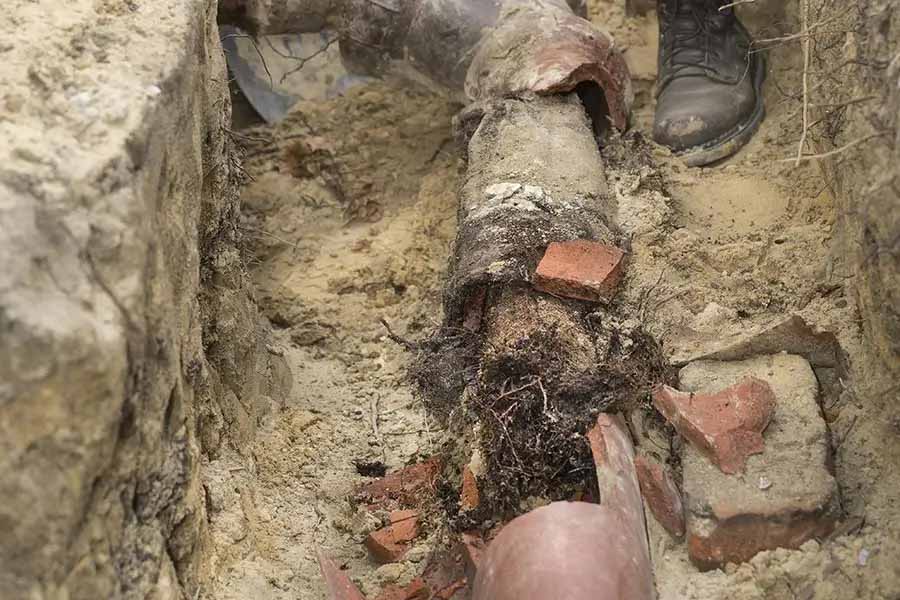
In Butler homes with older cast iron drain systems, the interior surfaces of the pipes can scale and corrode over decades of use, narrowing the passage available for wastewater flow. Root intrusion through cracks or failed joints in older clay or cast iron sewer laterals is also a significant cause of progressively deteriorating drain performance that eventually produces slow drains throughout the home. Butler County’s mature tree canopy in older residential neighborhoods means that root intrusion into aging sewer laterals is a consistent and recurring concern.
A drain camera inspection, in which a small waterproof camera is fed through the drain system to transmit live footage of the interior pipe condition, is the most direct way to assess what is happening inside drain lines that cannot be evaluated visually from the outside. This diagnostic tool identifies corrosion, root intrusion, pipe sagging, and joint gaps with a precision that no other method can match, and it informs repair decisions with a level of specificity that prevents unnecessary work on sections of the system that are still in serviceable condition.
Water Heater Showing Signs of Corrosion or Leakage
In Butler homes where the water heater is approaching or beyond its expected service life, signs of corrosion or early leakage at the unit itself are worth treating as an indicator of the broader plumbing system’s condition rather than an isolated appliance issue. A water heater that has been in service long enough to show visible corrosion at its connections or base has been operating in the same water chemistry environment as the rest of the supply system, and the pipes connected to it have been subject to the same deteriorating influences over the same period of time.
Rust staining or mineral deposits around the supply and return connections, moisture at the base of the tank, or discolored hot water that does not appear when cold water is run separately are all signs that the water heater warrants professional evaluation. A technician can assess whether the issue calls for water heater repair to address a specific component failure or whether the age and condition of the unit make water heater replacement the more reliable and cost-effective resolution.

Acting on Early Signs Before They Become Bigger Problems
The pattern across all of the early signs described in this article is consistent: each one is less expensive and less disruptive to address when it is recognized and acted upon early than when it is allowed to progress to the point of active failure or water damage. Pipe damage that is caught through a professional inspection at the stage of discoloration, pressure reduction, or visible joint corrosion typically requires a targeted repair to a specific section. The same deterioration that reaches the stage of an active leak inside a wall, a sewer backup, or a tank failure requires a response that includes not just the plumbing repair but the remediation of whatever water damage has accumulated in the meantime.
At Spurk HVAC, we serve Butler and the surrounding Butler County communities with professional plumbing diagnostics and repair. Our licensed technicians take the time to assess your system thoroughly and explain what the findings mean for your home in practical, clear terms. If you have noticed any of the early signs described in this article or simply want a professional evaluation of your plumbing system’s current condition, contact our team today and schedule a visit at a time that works for your household.