
The duct system in your home is one of the least visible components of the HVAC system and, as a result, one of the most frequently neglected. Concealed inside walls, above ceilings, and through attic and crawl space areas, the ductwork network quietly delivers conditioned air to every room in the home every time the system runs. When that network develops problems, the consequences show up as reduced comfort, higher energy bills, and added wear on the HVAC equipment, but rarely as an obvious visible failure that a homeowner can point to and identify.
In our service calls throughout Franklin Park and the communities along Nicholson Road and through the Ingomar and Wexford corridors, ductwork problems are a consistent finding in homes across a wide range of ages and construction types. The mix of older split-level and ranch homes that populate many of Franklin Park’s established neighborhoods and the newer construction closer to the Wexford border includes duct systems installed under very different standards and now at very different stages of their service life. Regardless of when the ductwork was installed, recognizing the signs that it needs professional attention gives homeowners the opportunity to address the problem before it compounds into something more costly.
- Rooms That Never Reach the Right Temperature
The most direct symptom of a duct system problem is a room or group of rooms that consistently stays warmer in summer or cooler in winter than the rest of the home, regardless of how the thermostat is set. When conditioned air is leaking out of a duct section before it reaches the register serving that room, or when a branch duct has become disconnected, crushed, or kinked somewhere along its run, the air supply to that room is reduced to a fraction of what it should be. The central system may be operating perfectly, but the room at the end of a compromised duct run simply is not receiving its intended share of conditioned air.
This symptom is easy to misattribute. Homeowners who experience a chronically uncomfortable room often assume the HVAC system is undersized or failing, when the actual problem is a duct deficiency that a targeted repair can resolve. A technician who performs airflow measurements at each register and traces the branch serving the problematic room can confirm whether a duct issue is the cause and identify exactly where the problem is located.
In multi-story Franklin Park homes where duct runs extend from a basement air handler through interior walls to second-floor rooms, a disconnected or separated duct section can produce significant comfort discrepancies between floors that persist through multiple seasons before anyone investigates the duct system as the likely cause.
- Unexplained Increases in Heating and Cooling Costs
A duct system that is leaking conditioned air into unconditioned spaces is a direct and continuous source of energy waste. Every cubic foot of conditioned air that escapes through a gap in a duct joint, a failed seam, or a section of duct that has pulled apart at a connection is energy that the HVAC system expended to condition and that the household paid for but never benefited from. In homes where duct leakage is significant, this waste can account for 20 to 30 percent of total heating and cooling costs.
The challenge is that this waste is invisible. The air escapes into an attic, crawl space, or wall cavity, and the only evidence that reaches the homeowner is a utility bill that consistently runs higher than it should. When heating and cooling costs have increased noticeably over one or more seasons without a corresponding change in usage patterns, equipment age, or utility rates, duct leakage deserves serious consideration as a contributing factor.
Based on what we see in Franklin Park properties, particularly in homes where the ductwork has been in service for 15 years or more without professional inspection, leakage at joints that were sealed with standard duct tape at installation is extremely common. Standard cloth-backed duct tape degrades over time and loses its adhesion, allowing previously sealed joints to open progressively. Mastic sealant applied by a qualified technician during a HVAC ductwork repair visit provides a durable, long-lasting seal that does not degrade the way tape-based sealing does.
- Excessive Dust Throughout the Home
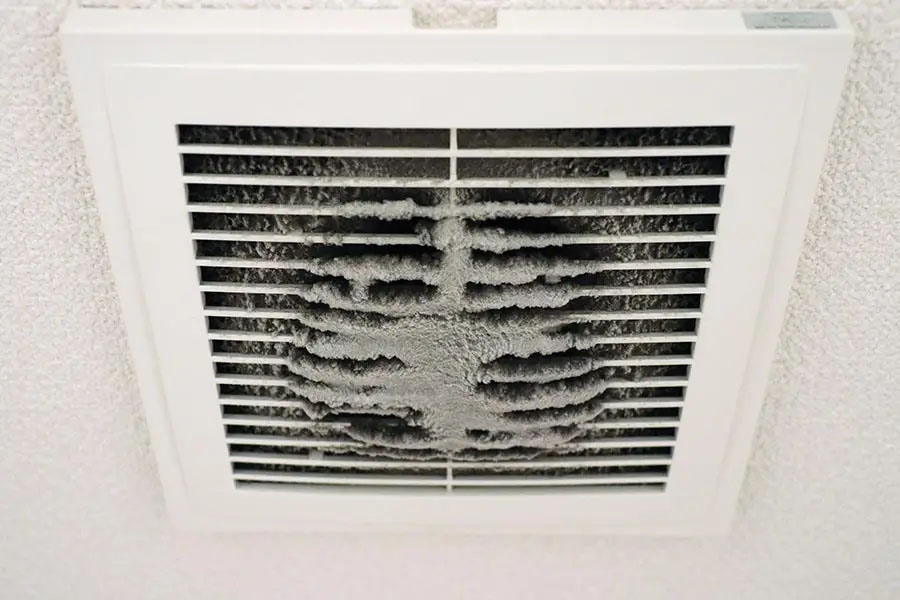
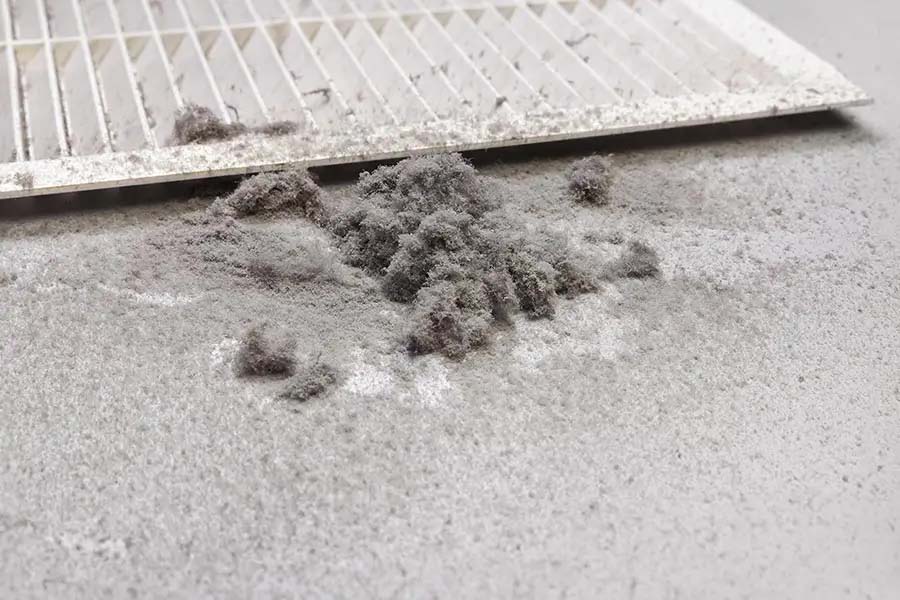
A duct system that draws air from unconditioned spaces through gaps and cracks in the duct assembly introduces whatever is in those spaces into the conditioned air supply. Attic insulation fibers, crawl space dust and debris, wall cavity particulates, and outdoor contaminants that have accumulated in unconditioned areas all become part of the air supply when the duct system is compromised. The result is a home that accumulates dust on surfaces faster than the HVAC filter can capture it, because the contamination is entering the air stream downstream of the filter rather than being captured by it.
Homeowners who notice that dust accumulates on furniture, shelving, and horizontal surfaces unusually quickly, or who find that certain rooms are consistently dustier than others, are often experiencing the effects of duct leakage that is introducing unfiltered air into the distribution system. This is particularly common in Franklin Park homes where duct runs pass through attic spaces, where fiberglass insulation particles are one of the most prevalent contaminants that can enter a leaking duct system.
Excessive dust is more than a housekeeping inconvenience. Particulates introduced through duct leakage include allergens, mold spores from unconditioned spaces, and fine particles that are not captured by standard filtration. In households with occupants who have respiratory sensitivities or allergies, duct leakage that introduces unfiltered air into the supply system is a genuine indoor air quality concern that warrants professional assessment.
- Unusual Noises Coming from the Duct System
The duct system in a well-functioning forced-air HVAC installation should be essentially silent during operation. A low hum from the air handler and the sound of air moving through registers is normal. Rattling, banging, whistling, or popping that originates from the duct system during operation is not.
Rattling from duct sections typically indicates that a section of duct has come loose from its support hangers and is vibrating against surrounding framing or structural members as air moves through it. A duct that is no longer properly supported can also shift over time in a way that creates kinks or collapses that restrict airflow.
Whistling from supply registers or from sections of the duct system during operation points to a restriction in airflow, which can be caused by a collapsed flexible duct, a damper that is partially closed, or a duct section that has been pinched or compressed by building materials or stored items in an attic or crawl space. The whistling is the sound of air being forced through a narrowed passage under pressure.
Popping or banging from the duct system, particularly at startup and shutdown, is commonly caused by duct sections that are expanding and contracting with temperature changes and are either undersized for the airflow they carry or are not adequately supported. While some degree of thermal movement is normal in sheet metal ductwork, loud or repetitive banging indicates a condition that a technician should evaluate.
- Visible Damage, Disconnections, or Improper Installation
In the portions of the duct system that are accessible, a visual inspection can reveal conditions that directly confirm a need for professional attention. Flexible duct sections that have been crushed, kinked, or compressed reduce airflow in the branch they serve in proportion to the severity of the compression. A flexible duct that has been bent at a sharp angle, which sometimes happens in attic or crawl space installations where there is limited room to navigate, can restrict airflow nearly as severely as a fully closed damper.
Disconnected duct sections are among the most impactful duct problems a home can have and are also among the most straightforward to identify visually when the affected area is accessible. A duct joint that has pulled apart entirely is delivering its full air supply into the unconditioned space around it rather than to the room it was designed to serve. In crawl space and attic installations, disconnected flexible duct sections are sometimes found that have been separated for years without being detected because no one had occasion to access and visually inspect those areas.
Improperly installed ductwork is a related concern in homes where additions or modifications were made to the duct system over the years by contractors working without a systematic approach to airflow design. Duct sections that were added without regard for the overall system balance, that were routed through exterior walls without proper insulation, or that were connected to the main trunk with fittings that are the wrong size for the airflow they need to carry all reduce the system’s ability to distribute air effectively.
- Humidity Problems and Musty Odors
The duct system interacts directly with the indoor air quality and humidity conditions of the home. When the duct system is drawing air from unconditioned spaces, it can introduce moisture and the biological contaminants associated with high-moisture environments into the conditioned air supply. Musty odors that appear when the HVAC system runs, that seem to emanate from the supply registers, or that are most pronounced in certain rooms served by specific duct branches are often a sign that moisture or microbial growth has developed somewhere in the duct system or in the unconditioned spaces it is inadvertently drawing from.
In Franklin Park homes with crawl space duct runs, this is a particularly relevant concern. Crawl spaces in western Pennsylvania accumulate ground moisture throughout the year, and a duct system that draws from or leaks into a humid crawl space introduces that moisture into the home’s air supply continuously. The result is elevated indoor humidity that the air conditioning system must work harder to manage, and in some cases visible condensation on supply registers that are delivering air that has picked up moisture content from the crawl space environment.
Humidity problems that are tied to duct system issues often benefit from a combined approach that addresses the duct leakage itself alongside the moisture conditions in the unconditioned spaces the duct system is interacting with. A technician can assess both the duct condition and the broader moisture picture to recommend an approach that addresses the root cause rather than the symptoms alone. In homes where indoor humidity has been a persistent challenge despite adequate air conditioning operation, an AC maintenance visit that includes duct assessment and an evaluation of the overall system performance often identifies the combination of factors that are working against comfort and indoor air quality simultaneously.
The Case for Professional Duct Inspection
Each of the six signs described in this article points to a duct system that is not functioning as it was designed to, and in most Franklin Park homes two or more of these signs are present at the same time. The cumulative effect is an HVAC system that works harder than it should to deliver less comfort than it should, at a higher operating cost than it should.
Duct problems that are identified and addressed before they compound produce straightforward, targeted repairs. A disconnected joint is reconnected and sealed. A leaking seam is sealed with mastic. A collapsed flexible section is replaced. The investment in those repairs is recovered through improved comfort and reduced energy costs over the seasons that follow. Duct problems that go unaddressed for years accumulate secondary consequences, including accelerated equipment wear, worsening indoor air quality, and the kind of comfort complaints that make an otherwise functional HVAC system feel like a persistent problem.
A professional duct inspection gives homeowners an accurate picture of what the system’s current condition actually is, based on measurement and direct observation rather than guesswork. For many Franklin Park homeowners, that inspection is the first time anyone has looked at the duct system with a systematic approach since it was originally installed.
At Spurk HVAC, our licensed technicians assess duct system conditions thoroughly and explain what we find in practical, actionable terms. To schedule a duct inspection or discuss the signs you have been noticing in your home, contact our team today and let us help you get your system performing the way it was designed to.