
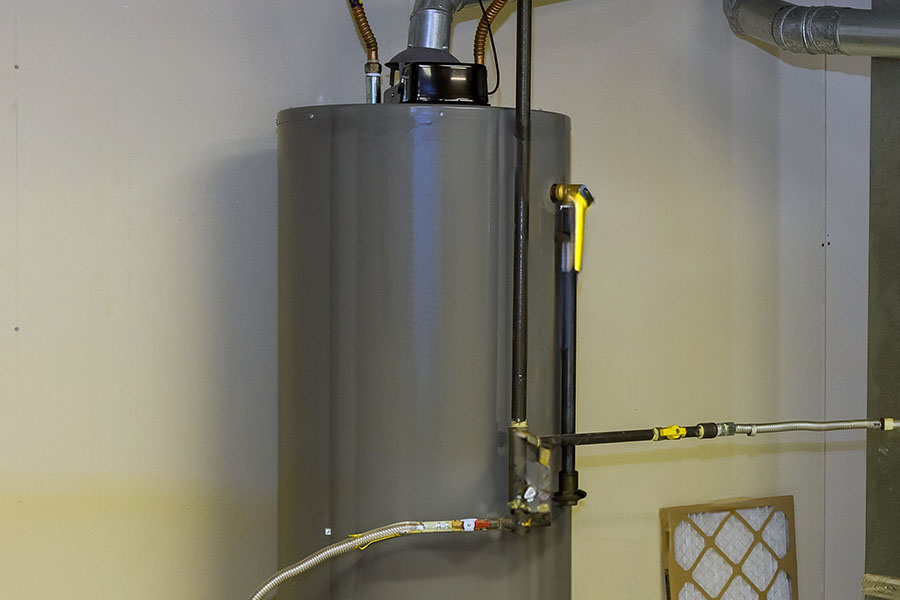
Running out of hot water is one of those problems that is easy to dismiss the first time it happens and increasingly difficult to ignore as it becomes a regular occurrence. For Ross Township homeowners, a water heater that cannot keep pace with the household’s daily demand is more than an inconvenience. It is a signal that something in the system is no longer functioning as it should, and in most cases that signal deserves professional attention rather than a wait-and-see approach.
In our service calls throughout Ross Township and the surrounding North Hills communities, from the established neighborhoods along Babcock Boulevard to the residential developments near the Ross Park Mall corridor, insufficient hot water is one of the most consistent plumbing complaints we encounter across all seasons. The causes range from straightforward maintenance issues that have accumulated over time to equipment that has simply reached the end of its practical service life. Understanding which of the five most common causes applies to a given situation is the first step toward resolving it effectively.
- Sediment Buildup Has Reduced the Tank’s Effective Capacity
Over time, the dissolved minerals carried in the water supply, primarily calcium and magnesium compounds, settle out of solution and accumulate as a layer of sediment at the bottom of a conventional storage tank water heater. In Ross Township, where the regional water supply carries a meaningful mineral load, this process begins from the first day the unit is in service and progresses continuously throughout the life of the equipment.
As that sediment layer thickens, it occupies volume at the bottom of the tank that was previously available for heated water storage. A 50-gallon water heater with several inches of sediment at the base is effectively a smaller unit delivering less usable hot water per cycle than it did when it was new. The sediment layer also sits between the burner or heating element and the water above it, insulating the heat source from the water it is trying to heat and reducing recovery efficiency. The unit takes longer to reheat after a draw, produces less hot water per hour than its rated recovery suggests, and the household begins to notice that the supply runs short during normal usage patterns that the unit handled without difficulty when it was new.
Annual professional maintenance that includes flushing accumulated sediment from the tank restores usable capacity and recovery efficiency. In units where sediment accumulation has been allowed to progress over many years without attention, flushing may not fully restore performance if the tank floor has been compromised by the sustained heat exposure the sediment layer caused. A technician can assess the unit’s current condition and advise whether flushing will be sufficient or whether the degree of deterioration makes water heater replacement the more practical and reliable path forward.
- A Failed or Degraded Heating Element
In electric tank water heaters, the heating elements are the components responsible for raising the water temperature from the incoming cold supply temperature to the set point. Most residential electric water heaters use a two-element configuration, with an upper element that handles initial heating and a lower element that maintains temperature and manages recovery after hot water is drawn. When either element fails, the unit’s heating capacity is effectively cut in half.
A failed lower element is the most common single-element failure because the lower element bears the greater share of the recovery workload. With only the upper element functioning, the unit can maintain temperature in the top portion of the tank but loses its ability to recover quickly after significant hot water draws. Households that notice adequate hot water for the first shower or two of the morning followed by a rapid and complete loss of hot water are often experiencing exactly this pattern.
A failed upper element typically produces a different symptom: lukewarm water rather than no hot water at all, because the lower element is still functioning but is not designed to handle the full heating load on its own. In either case, element failure is a component-level repair rather than a reason to replace the entire unit, provided the tank itself is in serviceable condition. A technician performing water heater repair can test each element, confirm which has failed, and replace it in a single visit, restoring full heating capacity without the cost or disruption of a full unit replacement.
- The Unit Is Undersized for the Household’s Current Demand
A water heater that was correctly sized for the household when it was installed may no longer be adequate if the household’s hot water demand has grown in the years since. Additions to the family, adult children returning home, the installation of a soaking tub or multiple-head shower system, or the addition of a dishwasher or washing machine that uses hot water all increase the demand the water heater must meet. When that demand exceeds the unit’s first-hour rating, the supply runs out during high-use periods regardless of how well the equipment is functioning.
This is a particularly common finding in Ross Township homes where the original water heater was sized for a smaller household or a less water-intensive lifestyle than what the home now accommodates. It is also a situation that tends to develop gradually, making it easy to attribute the shortfall to equipment failure rather than a fundamental mismatch between supply capacity and demand.
A technician can calculate the household’s actual hot water demand based on occupancy, fixture count, and usage patterns, and compare that figure to the first-hour rating of the existing unit. Where a meaningful gap exists, the options include replacing the unit with an appropriately sized storage tank water heater, transitioning to a tankless water heater that heats water on demand without the storage capacity constraint, or in some configurations adding a second unit to meet the demand that the existing unit cannot address alone. Each option has different upfront costs, operating costs, and practical implications, and a qualified technician can present those clearly enough that the homeowner can make a confident decision.
- The Thermostat or Gas Valve Is Malfunctioning
In both gas and electric water heaters, the thermostat is the component that signals the heating source to activate when water temperature falls below the set point and to shut off when the set point is reached. When the thermostat malfunctions, it may not be calling for heat at the right temperature, may be reading the water temperature inaccurately, or may be cycling the heating source on and off at incorrect intervals. The result is water that never fully reaches the set point, recovery that is slower than it should be, or in some cases water that fluctuates unpredictably between adequate and insufficient temperatures.
In gas water heaters, the gas valve serves a combined function that includes thermostat control and safety shutoff. A gas valve that is beginning to fail can produce symptoms similar to thermostat problems: inconsistent water temperature, incomplete recovery, and pilot light issues that prevent the main burner from operating reliably. These symptoms are often intermittent at first, which leads homeowners to dismiss them as occasional anomalies before they become consistent enough to prompt a service call.
Thermostat and gas valve issues are component-level failures that a licensed technician can diagnose through testing and address through targeted replacement. Identifying the specific component that has failed, rather than assuming the unit itself must be replaced, is exactly the kind of diagnostic precision that produces the right repair at the right cost. In Ross Township homes where the water heater is otherwise in good condition and within a reasonable service age, a thermostat or gas valve repair is typically the most economical resolution available.
- The Unit Has Reached the End of Its Practical Service Life
The average service life of a conventional storage tank water heater is eight to twelve years, with well-maintained units in favorable conditions occasionally extending beyond that range. As a unit approaches and exceeds that window, the cumulative effects of years of thermal cycling, mineral exposure, and component wear produce a system that is increasingly unable to meet the performance standards it was designed to deliver, regardless of what individual repairs might be made to specific components.
In Ross Township, where many homes have water heaters that were installed during the same construction phase as the house and have received little or no professional maintenance since installation, units operating beyond their expected service life are a common finding. These units may have failed anode rods that accelerated tank wall corrosion, significant sediment accumulation that cannot be fully addressed through flushing, and heating components operating at reduced efficiency due to scale buildup on element surfaces or burner degradation over years of use.
When a unit is consistently unable to meet demand despite being in a size category that should be adequate for the household, and when a professional evaluation reveals multiple concurrent areas of deterioration, the honest conversation is about whether continued repair investment in an aging unit makes practical and economic sense compared to replacement with new equipment that will perform at full capacity and carry a manufacturer’s warranty.
A technician can walk through the specific findings from the evaluation, the age and service history of the unit, and the cost comparison between continued repair and replacement clearly enough that the homeowner can make a decision that reflects both the immediate situation and the longer-term value proposition. For many Ross Township homeowners in this situation, a planned replacement on a reasonable timeline is considerably less disruptive and less expensive than continuing to manage a unit that is progressively less capable of meeting the household’s needs.
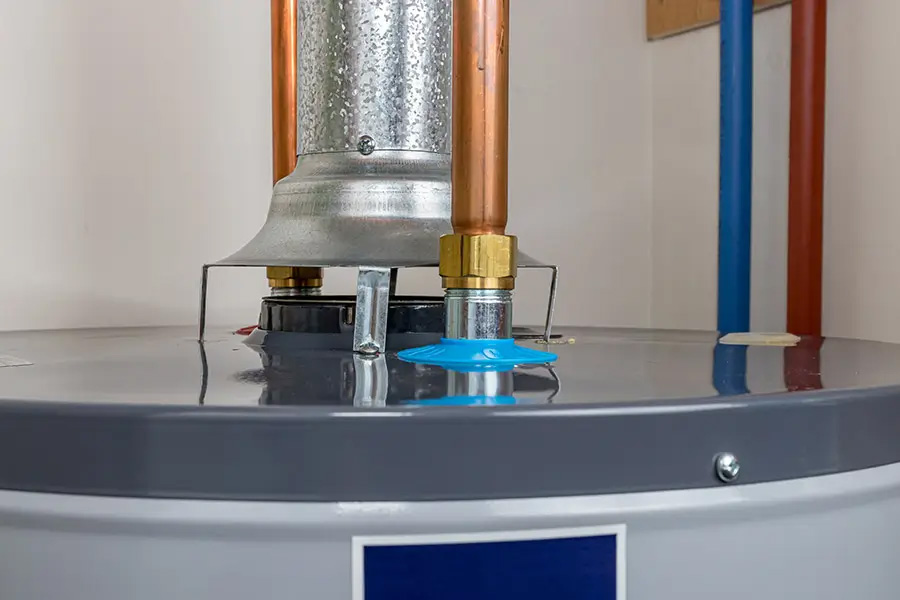
Getting the Right Answer for Your Ross Township Home
Insufficient hot water is a solvable problem in virtually every case, but the right solution depends entirely on accurately identifying which of the causes above is driving the shortfall. A sediment issue requires a different response than a failed element, which requires a different response than an undersized unit. What all five causes share is that they benefit from professional diagnosis rather than guesswork, and that the cost and disruption of the appropriate repair is almost always lower when the problem is identified early and addressed directly.
At Spurk HVAC, we have been serving Ross Township and the surrounding North Hills communities since 2018. Our licensed technicians evaluate water heater condition thoroughly and present findings and options honestly so homeowners can make informed decisions without pressure. To schedule a water heater evaluation or discuss the hot water shortfall you have been experiencing, contact our team today and let us identify exactly what is behind the problem and what it takes to resolve it.