

Cranberry Township summers are not the most extreme in the country, but they are reliably hot and humid from late June through August, and on the days when temperatures climb into the upper eighties and humidity settles in from the Ohio Valley, residential air conditioning systems run almost continuously. An AC system that handles a two-hour afternoon cooling cycle with no trouble can behave very differently when it is asked to run all day without a meaningful break. Components that are marginal under light demand become failures under sustained load, and problems that would otherwise develop slowly compress into a single uncomfortable afternoon.
In our service calls throughout Cranberry Township, from the dense residential developments along Route 228 to the newer construction closer to the Cranberry Woods business corridor, peak-day AC failures follow a consistent pattern. The system ran fine the day before. Temperatures climbed, the thermostat called for sustained cooling, and somewhere in the middle of the day the house stopped getting comfortable. Understanding what causes systems to struggle under sustained operation, and what steps keep them running reliably through the hottest days, is exactly what this article covers.
Start With a Professional Tune-Up Before Peak Season
The single most effective thing a Cranberry Township homeowner can do to ensure the AC runs reliably through a full day of demand is have the system professionally serviced before the cooling season begins. A professional AC tune-up performed in the spring gives a licensed technician the opportunity to identify and address every component that is marginal, deteriorating, or operating outside its designed parameters before that component is subjected to the stress of sustained summer operation.
During a tune-up visit, the technician will clean the evaporator and condenser coils, verify refrigerant charge, test capacitors and contactors, inspect the blower motor and fan assembly, check electrical connections, clear the condensate drain line, and confirm that the system is producing the temperature differential across the coil that indicates it is operating at full capacity. Each of these checks targets a category of component that, if left in a compromised condition, is likely to cause a problem on the hottest day of the year rather than a mild one.
Homeowners who schedule annual maintenance consistently report fewer mid-season breakdowns and longer equipment life than those who service their systems only after a problem has already developed. The investment in a spring tune-up is reliably lower than the cost of an emergency diagnostic call on a peak summer day, and significantly lower than the cost of a component failure that could have been caught during a routine inspection.
Keep the Air Filter Fresh Throughout the Season
An air filter that was clean in May may be heavily loaded by July, particularly in Cranberry Township homes with pets, dusty environments, or HVAC systems that run frequently. A filter that is loaded with debris restricts the airflow the system depends on, and under sustained operation that restriction produces consequences that would not appear during shorter run cycles.
When airflow across the evaporator coil drops below the system’s designed minimum, the coil surface temperature falls below freezing and condensation on the coil begins to freeze rather than draining away. A frozen evaporator coil blocks airflow almost entirely, shutting down the system’s cooling output and leaving the house to warm while the ice slowly thaws. This scenario is far more likely on a day when the system is running continuously than on a day when it cycles on and off with breaks in between.
Checking and replacing the air filter more frequently during peak cooling season is one of the simplest and most impactful habits a homeowner can develop. Standard one-inch filters in active households should be checked monthly during summer and replaced as soon as they show significant loading. Homes with high-efficiency filters rated MERV 11 or above should pay particular attention to filter condition because the finer filtration media loads faster and restricts airflow more severely when overdue for replacement. Staying current with AC and furnace air filter replacement through the summer is a low-cost habit with a direct impact on system reliability during extended run periods.
Protect the Outdoor Unit From Airflow Obstruction
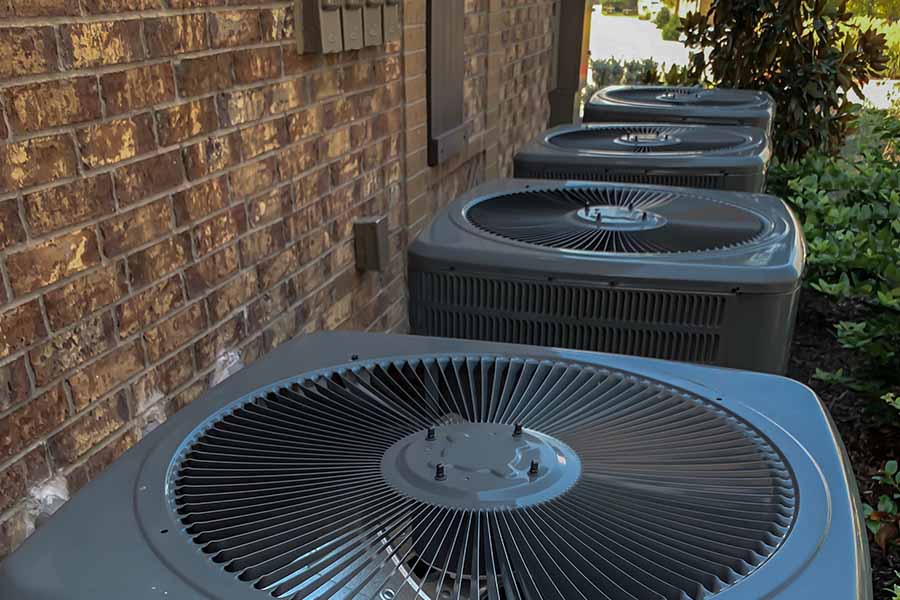
The outdoor condenser unit releases the heat that the system extracts from the indoor air. To do this effectively, it needs unrestricted airflow through the condenser coil on all sides. When airflow around the outdoor unit is compromised, the system cannot release heat as quickly as it is absorbing it, head pressure climbs, the compressor works harder, and cooling capacity drops exactly when demand is highest.
In Cranberry Township, where many residential properties have mature landscaping and outdoor units that were installed years before the surrounding plantings grew to their current size, vegetation encroachment on condenser units is a common finding. Grass, shrubs, and perennial plantings that have grown to within a few inches of the unit sides significantly reduce the airflow the condenser needs. The standard clearance recommendation is a minimum of 18 to 24 inches of open space around all sides of the unit and at least 5 feet of clearance above the fan discharge.
Beyond vegetation, the condenser coil fins themselves accumulate debris over the course of the spring and summer. Cottonwood, pollen, and airborne particles pack into the coil fin array and reduce the surface area available for heat rejection. A coil that was clean at the start of the season may be meaningfully fouled by midsummer, particularly in wooded or high-pollen environments. Professional AC coil cleaning removes this accumulation and restores full condenser performance, which is directly reflected in both cooling capacity and compressor longevity during sustained operation.
Manage Thermostat Settings for Sustained Demand Days
How the thermostat is configured has a significant effect on how hard the system works during a day of sustained demand. A thermostat set to an aggressive setpoint on a ninety-degree day asks the system to maintain a temperature differential that may be at or beyond its design capacity, which means the system runs without cycling off and accumulates the heat stress that continuous operation produces.
A setpoint that is one or two degrees higher than the household’s ideal comfort temperature reduces the demand load enough to allow the system occasional brief rest cycles, which helps stabilize operating temperatures in the compressor and other high-stress components. The difference in perceived comfort between 72 and 74 degrees is modest for most people, but the difference in system demand is meaningful on a peak day.
Smart and programmable thermostats also allow homeowners to pre-cool the house during the cooler morning hours before outdoor temperatures climb, which reduces the total load the system needs to manage during the hottest part of the afternoon. Starting the aggressive cooling cycle at 7 or 8 in the morning rather than waiting until 1 or 2 in the afternoon when the home has already absorbed several hours of solar heat gain allows the system to get ahead of the load rather than chasing it.
Address Humidity as Part of the Equation
Cranberry Township’s summer humidity, drawing from the same Ohio Valley moisture patterns that affect the broader Pittsburgh region, makes cooling harder than the air temperature alone suggests. High relative humidity makes occupants feel warmer than the thermometer indicates, which leads to lower thermostat setpoints and longer system run times as the household pursues comfort that the air conditioner alone struggles to deliver.
A properly functioning air conditioner removes moisture from the indoor air as part of the cooling process. But in homes where the humidity load is genuinely beyond what the AC system can manage, the result is a house that feels clammy even when the temperature is at the setpoint, occupants who keep pushing the thermostat lower, and a system that runs continuously without producing the comfort the household is looking for.
In these situations, a whole-home dehumidifier working in parallel with the air conditioning system addresses the humidity load directly, allowing the AC to maintain comfort at a higher temperature setpoint and run less aggressively during sustained demand periods. Homes in Cranberry Township where indoor humidity regularly exceeds 55 to 60 percent relative humidity during the summer, even with the air conditioner running, are strong candidates for this type of supplemental humidity management.
Know the Signs That the System Is Struggling
On a long, hot day, it helps to recognize the early signs that the AC system is approaching a problem before it reaches an outright failure. Catching these signs early allows a homeowner to take protective steps and contact a technician while the situation is still manageable rather than after the system has shut down entirely.
The supply air is noticeably warmer than usual. If the air coming from supply registers is only slightly cooler than room temperature rather than the 15 to 20 degree differential a healthy system produces, the system is underperforming. This can indicate low refrigerant, a dirty coil, or a struggling compressor.
The outdoor unit is running but the air handler seems to be producing less airflow than normal. Reduced airflow at the registers can indicate a frozen evaporator coil, a failing blower motor, or a severely loaded filter. Any of these conditions worsens under continued operation.
The system is short cycling, starting and stopping more frequently than usual. A system that is cycling on and off rapidly, particularly on a day when sustained demand should be keeping it running in longer intervals, may have a refrigerant issue, an electrical component problem, or an overheating condition in the compressor.
Circuit breakers for the outdoor unit or air handler trip. A breaker that trips during a sustained run on a hot day indicates that a component is drawing more current than it should. Resetting the breaker and continuing to run the system without identifying the cause of the overcurrent condition risks further damage to the component that triggered the trip.
When any of these signs appear, the appropriate response is to reduce the demand on the system by raising the thermostat setpoint slightly and contacting a technician for a diagnostic visit. Running a struggling system at maximum demand accelerates the progression from a developing problem to a complete failure.
Have a Reliable Service Relationship Before You Need One
One of the most practical steps a Cranberry Township homeowner can take toward keeping the AC running reliably all day is establishing a relationship with a trusted HVAC service provider before an emergency arises. Homeowners who have an established relationship with a service company, and ideally who have their system on a maintenance agreement, receive faster response when a problem develops during peak season than those calling in for the first time on the hottest day of the year.
If the system does develop a problem that requires professional AC repair, having a technician who is familiar with the system and its history allows for faster diagnosis and more informed repair decisions than starting from scratch with an unfamiliar unit under time pressure.
Keeping Your Cranberry Township Home Cool All Summer
Keeping an air conditioning system running reliably through a full day of peak summer demand is not complicated, but it does require consistent attention to the maintenance habits and system conditions that determine how a unit performs under stress. A professionally serviced system, a clean filter, an unobstructed condenser, and sensible thermostat management are the foundation of reliable summer cooling in Cranberry Township homes.
At Spurk HVAC, we have been helping homeowners across Cranberry Township and the broader Butler County corridor stay comfortable through western Pennsylvania summers since 2018. Our licensed technicians are available for seasonal maintenance, diagnostic visits, and repairs when the system needs more than routine care. To schedule service or get ahead of the season before peak demand arrives, contact our team today and let us make sure your system is ready for whatever the summer brings.