
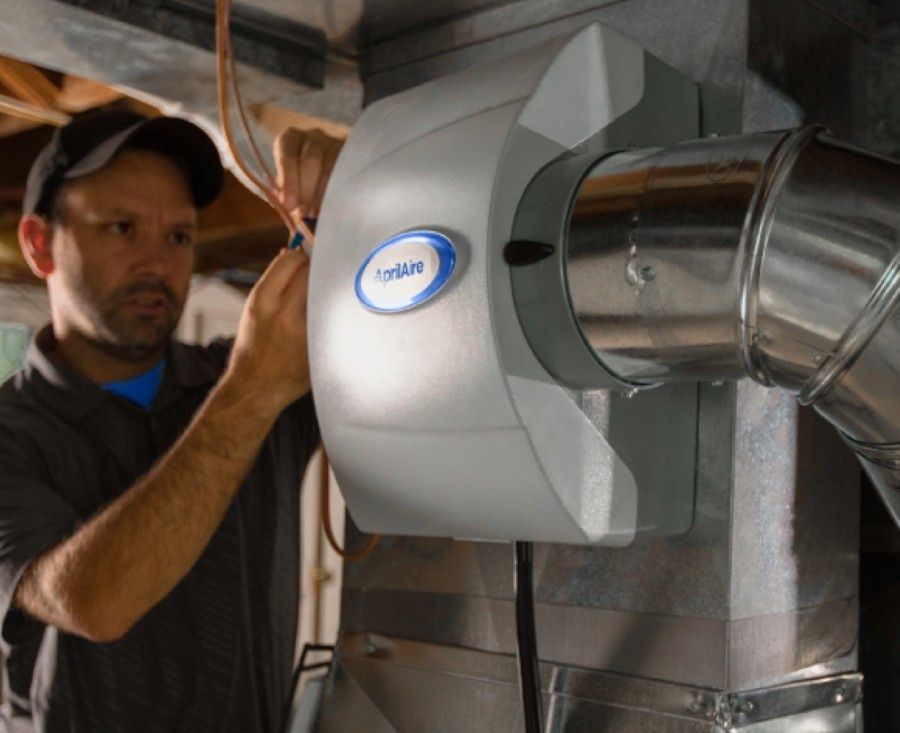
Pittsburgh winters are hard on homes and the people in them. Temperatures swing from frigid to mild within days, and during the coldest stretches, your heating system runs nearly around the clock to keep up. What most homeowners don’t realize is that all that heating comes at a cost beyond the utility bill: the more your furnace runs, the more moisture it strips from your indoor air.
In our service calls throughout the Pittsburgh area, dry air complaints are among the most consistent things we hear from homeowners during winter months. Scratchy throats, dry skin, static electricity, and even damage to hardwood floors and wood furniture are common signs that indoor humidity has dropped below a comfortable and healthy range. This article explains why dry air is such a persistent issue here and what a whole-house humidifier does to address it.
How Dry Air Affects Your Health and Home
Low indoor humidity doesn’t just feel uncomfortable. It has real consequences for your health and your home over time.
Respiratory issues: Cold, dry air pulls moisture from your nasal passages, throat, and lungs. This leads to nosebleeds, persistent coughs, and increased susceptibility to respiratory conditions. For household members with asthma or allergies, dry winter air often makes symptoms noticeably worse.
Poor indoor air quality: Low humidity allows dust, allergens, and airborne irritants to circulate more freely throughout your home. Combined with Pittsburgh’s winter air quality patterns, this creates conditions that are particularly hard on anyone with sensitivities.
Skin, lip, and eye irritation: Dry air depletes moisture from skin and mucous membranes. Cracked skin, chapped lips, and dry, irritated eyes are common complaints from homeowners who haven’t addressed their indoor humidity levels.
Damage to wood and furnishings: Wood contracts and expands with changes in humidity. Prolonged exposure to dry indoor air causes hardwood floors, wood furniture, door frames, and trim to shrink, crack, and warp over time. This is an especially common issue in older Pittsburgh-area homes with original hardwood throughout.
Static electricity: Low humidity amplifies static electricity buildup, which is annoying at minimum and potentially damaging to sensitive electronics.
Why a Whole-House Humidifier Is the Right Solution
Portable humidifiers address one room at a time and require constant refilling and cleaning. A whole-house humidifier integrates directly with your existing HVAC system and conditions the air throughout your entire home automatically, maintaining indoor humidity within the ideal range of 30 to 50 percent without requiring daily attention.
The benefits extend beyond comfort. Properly humidified air feels warmer at lower temperatures, which means your heating system can operate more efficiently without sacrificing comfort. Homeowners who add humidifier installation to their HVAC setup often notice a reduction in heating costs alongside the improvement in air quality.
A whole-house humidifier also provides consistent protection for your home’s structure and contents throughout the season, something a portable unit running in one room simply cannot do.
What Are Your Whole-House Humidifier Options?
There are two primary types of whole-house humidifiers, and the right choice depends on your home’s size and airflow characteristics.
Bypass Humidifier
A bypass humidifier installs on your ductwork and uses your furnace’s existing airflow to evaporate water and distribute moisture throughout the home. These units are reliable, energy-efficient, and well-suited to homes up to approximately 3,500 square feet. They operate quietly and require minimal maintenance, making them a straightforward and cost-effective solution for most Pittsburgh-area homes.
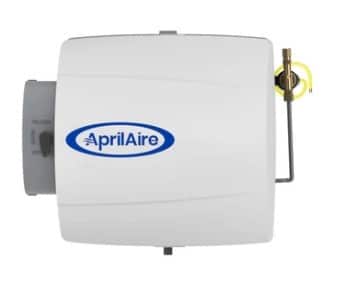
Whole-House Small Bypass Evaporative Humidifier
Aprilaire 500
At Spurk HVAC, we recommend the Aprilaire 500 Whole House Small Bypass Evaporative Humidifier for its reliable performance, efficiency, and easy maintenance.
Fan-Powered Humidifier
A fan-powered humidifier uses a built-in fan to draw air through a moistened evaporator pad, which speeds up moisture distribution and makes these units more effective in larger homes or spaces with higher airflow demands. Models like the Aprilaire 720 with Hydrocare Technology also incorporate scale-reduction features that minimize mineral buildup, keeping long-term maintenance needs low and efficiency high.
For most homes we service in the Pittsburgh area, we recommend the Aprilaire 720 Fan-Powered Evaporative Humidifier for its combination of output capacity, low maintenance requirements, and long-term reliability.
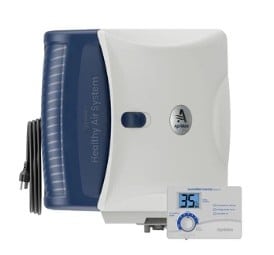
Unlike bypass models, fan-powered humidifiers like the Aprilaire 720 with Hydrocare™ Technology use a built-in fan to pull air through a moistened filter. This speeds up evaporation and efficiently distributes humidity throughout larger homes or spaces with higher airflow needs.
Hydrocare™ Technology helps reduce scale buildup, ensuring long-term efficiency with minimal maintenance—providing a hassle-free way to maintain optimal indoor humidity.
At Spurk HVAC, we recommend the Aprilaire 720 Fan-Powered Evaporative Humidifier for its high performance and low maintenance.
How Whole-House Humidification Supports Your Overall HVAC System
A humidifier doesn’t work in isolation. Its performance depends on the health of the HVAC system it’s connected to. A furnace that’s overdue for maintenance, a clogged air filter, or ductwork with significant leakage will all affect how well humidity is distributed throughout your home.
Pairing humidifier installation with routine furnace maintenance ensures your entire system is working together efficiently. It’s also worth considering whether your home’s indoor air quality would benefit from additional solutions alongside humidification, particularly if allergens, dust, or airborne contaminants are a persistent concern.
Based on what we see in Pittsburgh-area properties, homes that address humidity as part of a broader indoor air quality strategy consistently perform better in terms of both comfort and air quality than those that treat it as a standalone fix.
What to Expect From a Professional Humidifier Installation
A whole-house humidifier installation typically takes a few hours and is minimally disruptive to your home. The unit is connected to your furnace, plumbed to a water supply line, and integrated with your thermostat or a separate humidistat that monitors and maintains your target humidity level automatically.
Our technicians size the unit to your home, verify that your existing HVAC system is compatible and in good working condition, and walk you through the maintenance schedule before leaving. Whole-house humidifiers are designed for long-term reliability, but like all mechanical equipment, periodic inspection and water panel replacement keep them running at their best.
Protecting Your Pittsburgh Home From Dry Winter Air
Dry indoor air is a solvable problem, and for Pittsburgh homeowners, the winter months make it a particularly relevant one. A properly installed whole-house humidifier improves comfort, supports respiratory health, protects your home’s structure, and takes the strain off your heating system, all season long.
At Spurk HVAC, we’ve been helping homeowners across Pittsburgh, Cranberry Township, Wexford, Gibsonia, Mars, and the surrounding communities manage their indoor environments since 2018. If dry air has been affecting your home this winter, contact our team today to schedule a consultation and find out which humidification solution is the right fit for your home.