
If you’re looking for flexible heating and cooling options for individual rooms or problem areas in your home, a ductless mini-split system is worth understanding. In Pittsburgh and the surrounding communities, many homes were built without ductwork, or with limited duct systems that don’t reach every part of the building. We see this regularly in older neighborhoods throughout the North Hills, in slab homes and condos across the region, and in homes with finished basements or converted upper-level spaces where extending existing ductwork simply isn’t practical.
As a Mitsubishi Electric Diamond Contractor, we’ve been working with, installing, and repairing mini-splits for years. In this article, we’ll explain what a ductless mini-split is, how it works, and why it’s different from traditional HVAC systems. Most importantly, by the end, you’ll have the information to decide if it’s the right system for you.
Where Are Ductless Systems Most Commonly Used?
In our work across Pittsburgh-area homes, these are the situations where ductless mini-split installation most frequently makes sense:
- Garages: Detached or attached garages are rarely connected to a home’s central HVAC system. A mini-split allows year-round comfort in a workspace, home gym, or climate-controlled hobby space without the cost of major ductwork additions.
- Master bedrooms: Rooms at the far end of a duct run often receive less conditioned air than rooms closer to the air handler. Mini-splits can resolve persistent comfort issues in these spaces without requiring changes to the existing system.
- Finished basements: Basement entertainment spaces and home offices often run too cold in winter and too warm in summer, especially when the central system wasn’t originally designed to condition that square footage. A mini-split addresses this directly.
- Attics and upper-level guest rooms: Upper floors without duct access are natural candidates for ductless equipment, particularly in older Pittsburgh-area homes where attic conversions were done without extending the original HVAC system.
- Slab homes, condos, and patio homes: Without a basement to house traditional equipment, these properties often have limited heating and cooling options. Ductless systems provide an efficient, flexible alternative.
Beyond temperature control, ductless systems offer a few additional benefits worth noting. The evaporator coil collects condensate, which means they actively remove humidity from the air, a meaningful advantage during Pittsburgh’s humid summers. They also include washable filters that capture airborne particulates, contributing to cleaner indoor air. And like any HVAC equipment, they require regular maintenance to perform well over time.
How Does a Mini-Split Work?
Most ductless mini-splits function as heat pumps, meaning they can both heat and cool. Rather than generating heat through combustion, a heat pump moves heat energy from one place to another. In cooling mode, it pulls heat out of your indoor air and releases it outside. In heating mode, it reverses the process, extracting heat energy from outdoor air and moving it inside.
This process works even in cold temperatures. While it may seem counterintuitive, there is still extractable heat energy in outdoor air well below freezing, and modern cold-climate mini-splits are engineered to operate effectively in the low temperatures common to Pittsburgh winters.
One of the defining advantages of multi-zone mini-split systems is the ability to control temperatures independently in different rooms. Each indoor unit, or “head,” operates separately, which means different occupants can set different temperatures in their respective spaces without compromising the whole-home system.
What Types of Mini-Splits Are There?
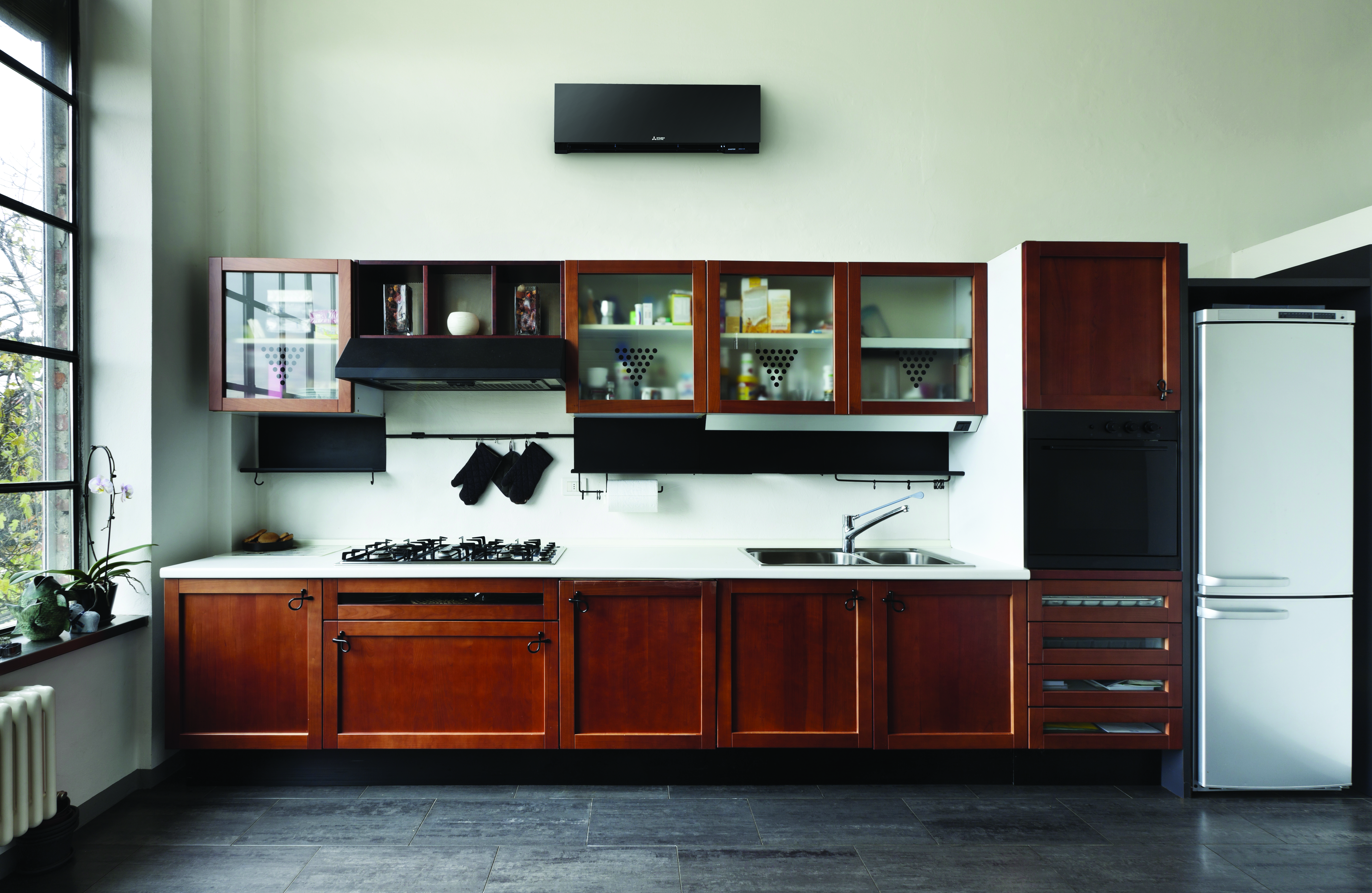
You’re probably most familiar with the wall-hung variety of mini-split that sits at eye level or above. Doesn’t that look out of place? It can, luckily, ductless systems have more variety, colors, and styles than this that can match the design of any room. Some examples include:
Wall-Mounted
The most common style, typically installed near the ceiling on an exterior wall.
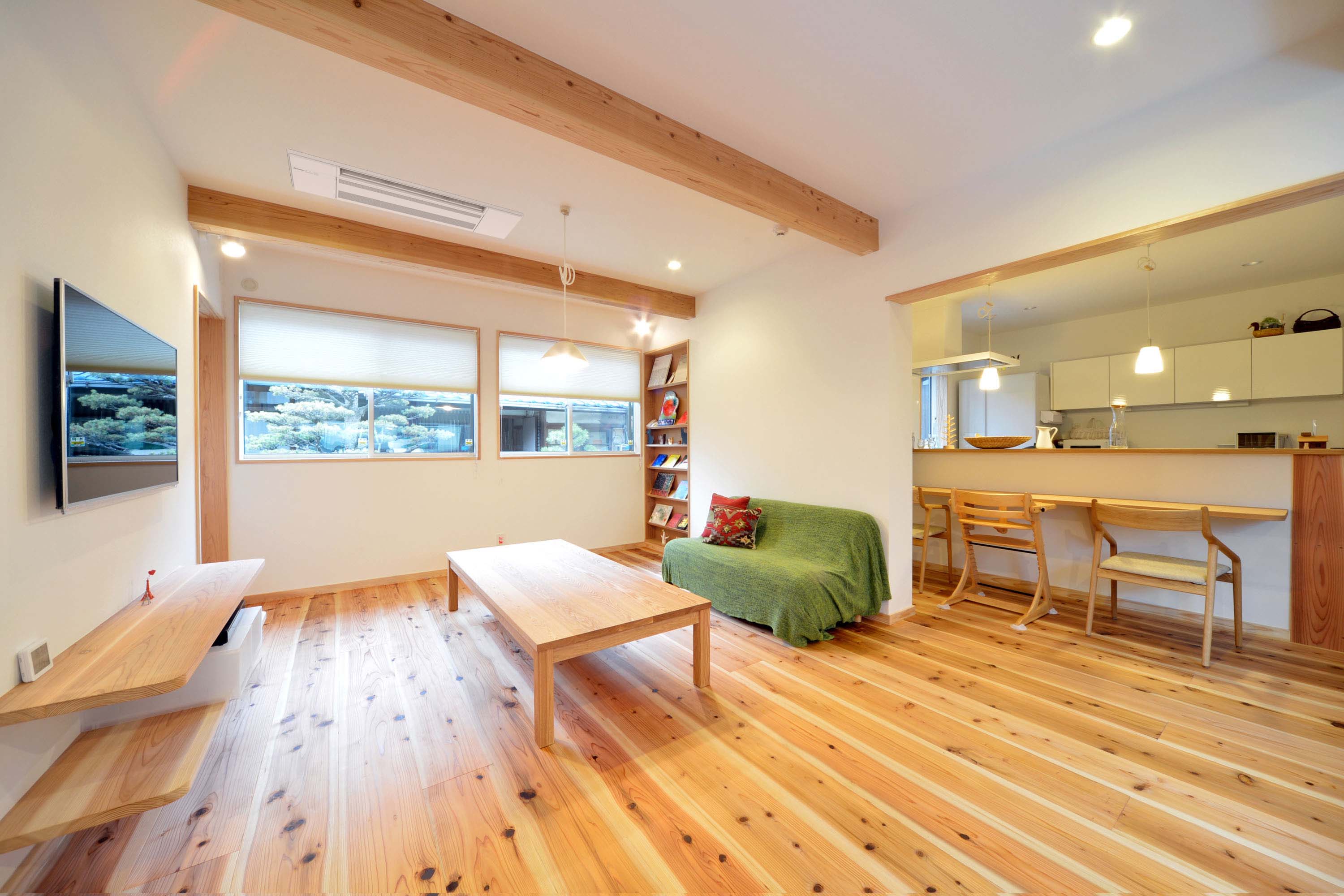
Ceiling Cassette
Recessed into the ceiling for a more discreet appearance, with airflow distributed in multiple directions.
Floor-Mounted
Installed near the floor, useful in spaces with limited wall or ceiling clearance.

There are also ducted and hybrid mini-split options. In these configurations, a compact air handler is installed in an attic or crawl space and connected to a short duct run serving a specific area of the home. This approach works well for home additions or spaces that are separated from the main duct system.
Residential mini-split systems are available in a range of capacities, from small single-head units suited to a single room up to larger multi-head systems capable of conditioning several zones throughout a home.
What Parts and Service are Different From Central Air?
Parts are unique to most types of HVAC equipment, so ductless systems aren’t unique in that regard. However, a few items that separate them.
The main filter on a mini-split can be removed, washed, dried, and re-inserted by the homeowner. However, cleaning other internal parts needs to be handled by a licensed Spurk HVAC service technician, who will have the equipment and materials needed to handle the process thoroughly and safely.
The filters also don’t catch the same level of germs or allergens as many whole-home air filters. There are carbon filters and small air purifiers that can be added to most systems that handle this function, but the carbon filters need to be replaced periodically or they will stop functioning efficiently, and any air filter will service a smaller area than a whole-home system, much like the mini-split itself.
Related: How often do I need to change my air filter?
Mini-Split Efficiency & Lifespan

Efficiency is where ductless systems can shine.
Many people have heard of SEER Rating, which stands for Seasonal Energy Efficiency Rating. It’s a calculation of how much energy it takes to cool your home to a certain degree. For heating, the acronym is HSPF, or Heating Seasonal Performance Factor.
Whole-home air conditioners can typically get up to about 22-23 SEER. The cooling in a ductless mini-split can be over 30 SEER! The same is true for HSPF, where ductless systems are among the most efficient machines on the market.
The primary reason for this is that mini-splits use inverter technology and a variable-speed compressor. The equipment takes high-voltage electricity coming in and converts it into DC voltage. This means less energy and more work.
The compressor’s variable speed also means that the airflow is matched to the temperature. Much like a dimmer on a light, it has more than an “on/off” switch. What this means is that it’s only using as much energy as it needs. By contrast, on most standard A/C units you have only one or two speeds, so the machine turns on and off more often.
Mitsubishi Electric mini-splits also come with room sensors to gauge temperature and hot or cold spots. In this way, they can automatically adjust to stay at a certain comfort level.
This is the highest level of technology built into an HVAC system. However, it still requires regular maintenance to continue running efficiently. Properly maintained, you can expect 12-15 years on average from your system, or more on occasion.
Is DIY a Good Option?
You’ve probably seen the commercials or Facebook ads that talk about purchasing and installing your own ductless system. While any decision about your home heating and cooling is ultimately yours to make, there are several risks to be aware of with this option.
With a licensed, trained HVAC contractor, you’re going to have equipment that’s installed to manufacturer code, tested, and commissioned to ensure proper efficiency, and maintained for the life of the system to make sure it stays efficient.
By contrast, you have none of those assurances with a self-installation. The equipment won’t be warrantied, finding parts can be a hassle (or impossible) in case it breaks down. If you have to turn to a contractor for repairs, there’s no guarantee they’ll be able to secure parts either, which are often specific to the make and model of a unit.
Homeowners often underestimate the complexity of installations as well. There are elements of carpentry, electrical work with high-voltage wiring, working with flammable and combustible materials, and the use of open flames for brazing (a form of welding). If you get into a pinch, you’ll be hard-pressed to find a contractor willing to finish the install. We won’t touch it and many of our friends in the industry won’t either.
Beyond that, much of the equipment required to perform each of those tasks is highly specific and sometimes very expensive. Do you have all the proper tools, know how to use each, and want to buy them for a one-time installation? Many of the units for sale online for DIY installation don’t come with all of the proper tools, and sometimes don’t include all primary parts required for it to fully function.
There’s a myth that HVAC equipment is much like an appliance: just plug it in. This is not the case. The skills, training, and tools required to guarantee a responsible installation are not things the average homeowner has.
If an HVAC contractor makes a mistake during installation, it won’t cost you a dime. Good contractors will carry a labor warranty and will make things right if they make a mistake. If you make a mistake, though, there’s no safety net.
Related: Why you shouldn’t DIY Your HVAC System, Benefits of a High-Quality Installation
Is a Mini-Split Right for Your Home?
The strongest candidates for ductless systems are homeowners with one or more of the following situations:
- A home built without ductwork, or with a duct system that doesn’t serve the entire building
- Specific rooms or zones that consistently run too hot or too cold
- A home addition, finished basement, garage conversion, or sunroom that lacks HVAC coverage
- A desire for room-by-room temperature control without replacing the existing whole-home system
For homes where installing a full duct system would be cost-prohibitive, ductless equipment often represents a more practical and efficient path to whole-home comfort. Consulting with an experienced contractor is the most reliable way to evaluate your options.
On the cost side, single-head systems typically start around $5,000 for equipment and installation, with costs increasing for larger multi-zone configurations. If you’re considering a system primarily for cooling, it’s worth selecting a model that also heats. The cost difference between cooling-only and heat pump models is usually modest, and a cooling-only unit cannot be retrofitted for heating after installation.
Choosing the Right HVAC Solution for Your Pittsburgh Home
Ductless mini-splits aren’t the right fit for every home, but for the situations where they are, they offer a level of efficiency, flexibility, and comfort control that traditional systems can’t match. Working in homes across Pittsburgh, Cranberry Township, Wexford, Gibsonia, Mars, and the surrounding communities, we’ve helped many homeowners find solutions for spaces their existing systems couldn’t reach.
If you’re unsure whether a mini-split is appropriate for your home, a professional assessment is the best starting point. At Spurk HVAC, our team evaluates your specific situation and provides honest guidance on whether ductless is the right path or whether another heating and cooling solution better fits your needs.
Contact our team today to schedule a free consultation and find out what the right system looks like for your home.