
DIY furnace maintenance is real and worth doing, but it stops at the cabinet door. Homeowners can change filters, keep vents clear, check thermostat placement, clear exterior vent terminations, and test detectors. Anything involving the burner, blower, gas valve, or heat exchanger belongs to a licensed technician.
That line exists for a reason. Guides circulate online instructing homeowners to remove the combustion chamber door, run the burner with it off, unbolt the control panel and let it hang by its wiring, and blow compressed air at the flame sensor. Each of those steps carries real risk, and none of them saves enough money to justify it.
Complete Comfort Heating, A/C & Plumbing Repair provides heating services in Greenwood, IN, and we see the results of that advice every winter. Here is a more useful division of labor.
What Does DIY Furnace Maintenance Actually Cover?
Furnace maintenance splits cleanly into two categories, and the boundary is the cabinet.
Outside the cabinet sits everything a homeowner can address safely. Filters, vents, registers, thermostat, exterior venting, and the detectors that protect the household. These tasks require no tools beyond a screwdriver, involve no gas or high voltage, and cover a meaningful share of what causes furnace problems.
Inside the cabinet sits gas piping under pressure, line voltage wiring, an igniter reaching well over a thousand degrees, a burner assembly whose alignment affects combustion quality, and a heat exchanger separating exhaust gases from the air your family breathes. Assessing any of it requires combustion analysis equipment and training.
The genuinely useful DIY work is the first category. Doing it consistently matters more than doing the second category badly.
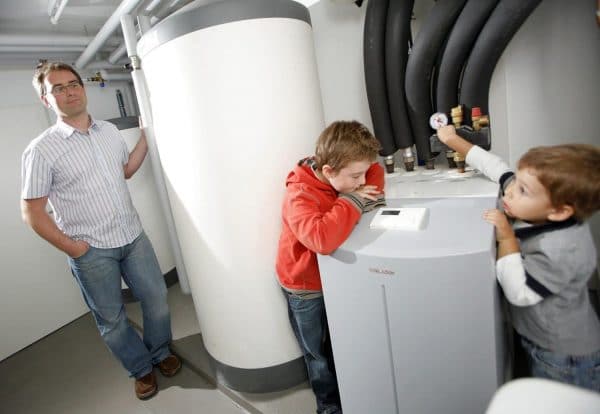
5 DIY Furnace Maintenance Tasks You Can Safely Do
1. Replace the Air Filter
This is the highest-value task available to a homeowner, and the easiest to neglect.
A loaded filter restricts airflow, which forces the blower to strain, causes the heat exchanger to run hotter than designed, and trips the high limit switch into a short cycling pattern that wears out ignition components. Extended operation under that restriction contributes to heat exchanger metal fatigue.
Replacement intervals depend on filter thickness. One inch filters generally need changing every thirty to ninety days. Four to five inch media cabinet filters last six to twelve months because of their greater surface area. Households with pets, ongoing renovation, or allergy concerns should shorten those intervals.
One caution worth stating. Higher MERV ratings are not automatically better. Denser media restricts airflow, and installing a filter rated above what your system tolerates produces the same symptoms as a clogged one. Most residential systems perform well in the MERV 8 to 13 range, and a technician can confirm what yours handles.
Some homes have more than one filter, including grille-mounted units in hallway ceilings that get forgotten for years. Confirm how many yours has.
2. Keep Vents and Registers Clear
Airflow problems do not all originate at the furnace. Supply registers blocked by furniture, rugs, or drapes and return grilles clogged with dust both raise static pressure across the system.
Walk the house and confirm every supply register is unobstructed and every return grille is clean. Vacuum grille faces as part of regular cleaning.
Resist the common habit of closing registers in unused rooms. It does not save energy. It raises pressure throughout the duct system, strains the blower, and can push conditioned air out through duct leaks instead of into your living space. Combined with filter discipline, keeping the airflow path open is where indoor air quality solutions begin, since air only gets filtered when it actually moves through the system.
3. Check Thermostat Settings and Placement
A thermostat mounted in direct sunlight, above a heat source, on an exterior wall, or near a supply register reads inaccurately and causes the system to cycle incorrectly.
Older guidance suggested calibrating your thermostat each winter. That advice predates current equipment. Modern digital and smart thermostats do not require calibration, and if yours reads noticeably wrong, the fix is replacement rather than adjustment. If you still have a mercury bulb thermostat, upgrading delivers better accuracy and gives you programmable setbacks.
Verify the batteries in any battery-powered unit before heating season. A dead thermostat battery in January produces a service call that never needed to happen.
4. Clear Exterior Vent Terminations
High-efficiency furnaces vent through PVC pipes that exit a sidewall, and those terminations must stay clear. Snow drifts, ice buildup, leaves, and nesting material all block them.
A blocked intake or exhaust causes the furnace to shut down on a pressure switch fault, which is the system protecting you, or in worse cases allows exhaust gases to recirculate. After a heavy snow, check that both pipes are open and clear the surrounding area. Standard-efficiency furnaces venting through a chimney need the flue termination clear as well.
This is a five minute check that prevents one of the more common midwinter no-heat calls in this area.
5. Test Smoke and Carbon Monoxide Detectors
Heating season is the right time to test every detector in the house and replace batteries. Carbon monoxide detectors have a limited service life, typically five to ten years depending on the model, and expire regardless of battery condition. Check the manufacture date printed on the unit.
Place carbon monoxide detectors on every level and near sleeping areas. This is the single most important safety task on this list, and it costs almost nothing. Confirming your fire extinguishers are charged and accessible belongs in the same seasonal routine.
Why Opening the Furnace Cabinet Is Not DIY Territory
The step-by-step guides circulating online deserve a direct response, because each instruction carries a specific risk.
Running the burner with the combustion chamber door removed. That door is part of the sealed combustion and draft path. Operating the furnace without it disrupts proper venting and can allow combustion gases, including carbon monoxide, into the room where you are standing.
Vacuuming the burner and blower cavities. A standard shop vacuum is not rated for fine soot, and disturbing burner assemblies can misalign them, which changes the flame pattern and combustion quality. Soot present in the cavity is itself a sign of incomplete combustion that needs professional diagnosis rather than cleanup.
Unbolting the control panel and letting it hang by its wiring. Suspending a control board by its harness stresses connections, chafes insulation, and creates shock and short circuit hazards. Control boards are among the more expensive furnace components.
Removing and brushing the blower assembly. Blower wheels are balanced components. Removing and reinstalling one incorrectly introduces vibration that damages bearings and motor mounts, and the wiring involved is line voltage.
Blowing compressed air at the pilot, igniter, or flame sensor. Flame sensors require gentle abrasive cleaning by hand, not air. Compressed air drives debris deeper into the assembly, and hot surface igniters are brittle ceramic components that crack easily.
There is a financial angle as well. Most manufacturer warranties require documented professional maintenance, and homeowner work inside the cabinet can void coverage on a heat exchanger warranty worth thousands of dollars.
What a Professional Furnace Tune-Up Includes
A technician performs what the DIY list cannot, and most of it involves measurement rather than cleaning.
- Combustion analysis to verify the burner is producing complete combustion and measure carbon monoxide levels in the flue
- Heat exchanger inspection for cracks, corrosion, and separation, which is the primary carbon monoxide pathway
- Draft and venting verification to confirm exhaust gases are leaving the home properly
- Gas pressure measurement at the manifold against manufacturer specification
- Burner cleaning and alignment using proper technique and equipment
- Igniter and flame sensor service, including resistance testing to identify components nearing failure
- Blower wheel cleaning and motor amperage testing against rated draw
- Temperature rise measurement across the heat exchanger to confirm correct airflow
- Safety control testing, including the high limit switch, pressure switch, and rollout switch
- Electrical connection inspection for looseness and corrosion
Those measurements build a performance record. A furnace drifting from its baseline year over year signals developing problems long before anything becomes audible or visible. Scheduled furnace maintenance in Greenwood is the only routine opportunity to catch conditions that produce no symptoms until they become serious.
How Often Should a Furnace Be Serviced?
Once a year for a gas or oil furnace, scheduled in fall before the heating season loads it up. Heat pumps that handle both heating and cooling warrant twice-yearly service, since the equipment runs year round.
Book early when possible. Fall appointments are easier to schedule, any part requiring an order arrives before you need it, and a problem found in October is a repair rather than an emergency.
Homeowner tasks run on their own schedule. Filters monthly to quarterly depending on type, registers and grilles whenever you clean, exterior vents after significant weather, and detectors twice a year.
Warning Signs That Need a Professional Right Away
Some conditions warrant stopping and calling rather than continuing any maintenance routine.
Shut the system down immediately if you smell gas, if a carbon monoxide alarm sounds, if you hear a loud bang at startup, or if you notice metal on metal scraping. Leave the home before calling in the case of a gas odor or CO alarm.
Call promptly if the burner flame appears yellow or orange rather than blue, if you see soot around the furnace or rust streaking at the flue connection, if you find scorched or frayed wiring, or if the furnace short cycles repeatedly.
Schedule service for gradual changes such as rising heating bills, uneven heating between rooms, or a system that takes longer to reach setpoint than it used to. Prompt furnace repair in Greenwood after the first symptom consistently costs less than the cascade that follows waiting.
Why Greenwood Winters Make This Matter
Central Indiana asks a lot of a furnace. Systems run near continuously through January cold snaps when overnight lows reach the single digits, and equipment that was marginal through November fails within days of that first sustained stretch.
Housing stock varies considerably across the area. Homes around Old Town Greenwood often have older equipment with standard-efficiency venting through a chimney, where draft problems and flue deterioration carry combustion safety implications. Newer construction toward Center Grove typically has condensing furnaces with sidewall PVC venting, where snow and ice blockage at the termination is the more common midwinter issue.
Tight modern construction adds a factor worth noting. Well-sealed homes exchange less air with the outdoors, which is excellent for efficiency and means any combustion problem concentrates rather than dissipating. That makes annual combustion inspection and working carbon monoxide detectors more important, not less.
Keeping Your Greenwood Furnace Safe and Efficient
DIY furnace maintenance done well means handling the five tasks above consistently and leaving the cabinet closed. That division is not about gatekeeping. It reflects where a homeowner can genuinely help and where the tools, training, and measurement equipment actually change the outcome.
The framework is simple. If a task requires removing a panel that exposes gas piping, line voltage, or the burner assembly, it belongs to a technician. If it involves a filter, a vent, a thermostat, or a detector, it belongs to you. Do your part monthly and book the professional visit once a year.
Complete Comfort Heating, A/C & Plumbing Repair serves Greenwood, Carmel, Fishers, Noblesville, Indianapolis, and the surrounding communities with furnace maintenance, repair, and installation, and our technicians document what they measure so you can see how your system is trending. When you are ready to get ahead of the season, book a furnace inspection and we will handle the part that requires the equipment.
Frequently Asked Questions About Furnace Maintenance
Can I clean my own furnace?
You can clean the parts outside the cabinet, meaning filters, registers, return grilles, and exterior vent terminations. Cleaning burners, the blower assembly, or internal cavities requires opening a compartment containing gas piping and line voltage, and it risks misaligning components that affect combustion safety.
Does DIY maintenance void my furnace warranty?
It can. Most manufacturer warranties require documented professional maintenance, and unauthorized work inside the cabinet may void coverage. Heat exchanger warranties in particular carry significant value, so check your warranty terms before performing anything beyond filter changes and exterior cleaning.
How much does professional furnace maintenance cost?
Pricing varies by provider and by whether you carry a maintenance agreement, which typically bundles heating and cooling visits at a reduced rate. The relevant comparison is against a single emergency repair during a January cold snap, which generally exceeds several years of scheduled service.
What is the most important thing I can do for my furnace?
Change the filter on schedule. Restricted airflow contributes to short cycling, high limit trips, blower strain, and heat exchanger stress, and it is the most common preventable cause of furnace problems. It costs a few dollars and takes two minutes.
Do I still need professional service if my furnace is working fine?
Yes, because the conditions that matter most produce no symptoms. Heat exchanger cracks, marginal draft, incomplete combustion, and degrading safety controls are invisible without inspection and testing equipment, and each has carbon monoxide implications that surface only after the situation becomes serious.