
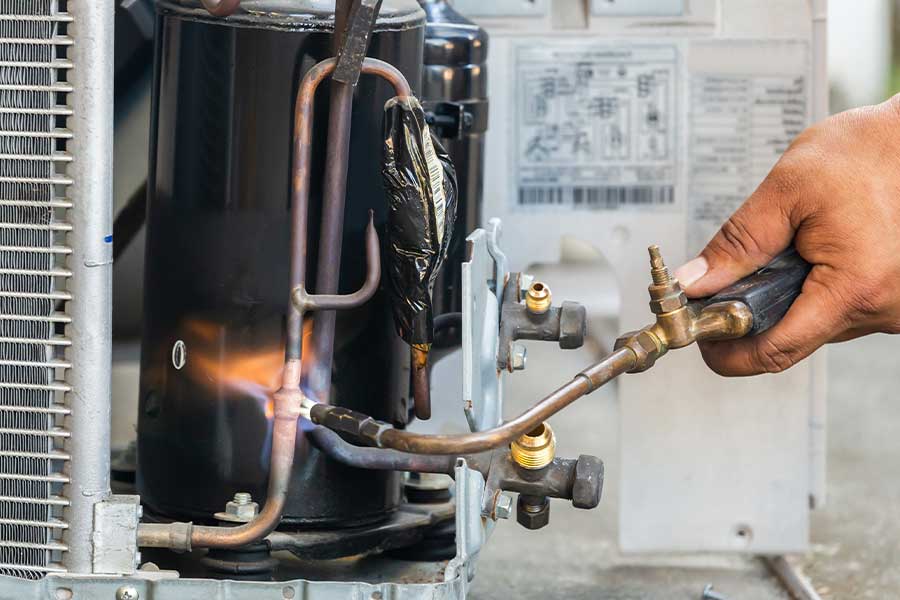
An AC compressor circulates refrigerant through your system, and when it fails your air conditioner blows warm air, runs up your energy bill, or makes grinding or buzzing noises. In Pittsburgh homes, the most common causes are refrigerant leaks, electrical failures, and mechanical wear, and each one calls for a licensed technician rather than a DIY fix.
What Is an AC Compressor?
The air conditioning compressor is the heart of your home’s cooling system. It’s the component that circulates refrigerant throughout the system, allowing your AC unit to absorb heat from indoor air and release it outside. Without a properly functioning compressor, your air conditioner simply can’t do its job. The compressor uses an electric motor to compress refrigerant vapor, transforming it into a high pressure, high temperature liquid. That pressurized refrigerant then flows through the condenser coil, where heat is released outside. From there, the refrigerant cools, expands, and absorbs heat from the indoor air as it circulates back to the compressor. Understanding the role of the compressor helps explain why so many AC problems in Pittsburgh homes trace back to this single component, and why regular inspection matters. If your system is already showing signs of trouble, AC repair in Pittsburgh is available to get a technician out quickly.
What Are the Signs Your AC Compressor Needs Repair?
There are a few common signs to watch for. If your AC is blowing warm air or not cooling as well as it used to, that’s a red flag. Unusually high energy bills can also point to a compressor problem. You may hear strange noises, like grinding or buzzing, coming from the outdoor unit, and ice buildup on the refrigerant lines is another clear sign of trouble. Don’t ignore these symptoms. A failing compressor can lead to a complete AC breakdown, and the sooner it’s addressed, the better your chances of a simple repair instead of a full replacement. Our team handles AC compressor repair throughout Pittsburgh and can usually diagnose the issue on the first visit.
Common AC Compressor Issues
Understanding the common problems behind a failing compressor is the first step toward a lasting fix. Here are four of the most frequent issues we see in Pittsburgh area systems:
- Refrigerant Leaks: A leak in the refrigerant lines or the compressor itself causes a loss of refrigerant, leading to decreased efficiency and, over time, potential compressor failure.
- Electrical Issues: Problems with the compressor’s electrical components, such as the capacitor or contactor, can prevent the compressor from starting or cause it to overheat.
- Mechanical Wear: Over time, the internal components of a compressor wear down, leading to decreased performance or complete failure.
- Overheating: Insufficient airflow, dirty coils, or other issues can cause a compressor to overheat, potentially leading to permanent damage.
Regular preventative maintenance helps catch these issues early and keeps a compressor operating efficiently for years longer than one that’s neglected.
How Professionals Diagnose and Repair a Faulty Compressor
Diagnosing a faulty compressor starts with confirming the unit is getting proper power and voltage, then testing start components like the capacitor and relay if the compressor isn’t running. A technician will also check for refrigerant leaks, since low refrigerant levels are one of the most common reasons a compressor fails prematurely. Refrigerant is a regulated substance, and handling it legally requires EPA certification, which is one of several reasons compressor work should always be left to a licensed HVAC professional rather than attempted as a do it yourself project. Once the problem is identified, a technician will determine whether the compressor can be repaired or needs to be replaced. A full replacement involves recovering the existing refrigerant, installing the new unit, and recharging the system, all according to strict safety protocols. With the right diagnostic approach, most Pittsburgh homeowners can have their AC system back up and running smoothly within a single visit.
Preventing Future AC Compressor Problems
Repairing a faulty compressor is important, but preventing the next issue is even more valuable. A few proactive steps go a long way toward extending the life of your unit and avoiding a costly breakdown.
- Schedule regular maintenance. An annual AC tune-up keeps your system running efficiently and catches small problems before they become expensive ones.
- Replace air filters regularly. A dirty filter strains the compressor and reduces airflow, which leads to premature wear.
- Confirm proper airflow. Make sure vents and registers throughout the house are unobstructed so the compressor isn’t working harder than it needs to.
- Consider upgrading to a modern, high efficiency system. Newer AC installation options are more reliable and more energy efficient, which saves money over the life of the system.

Keeping Your Pittsburgh Home Cool With a Healthy Compressor
When your AC compressor falters, it’s like the heart of your cooling system skipping a beat, and it rarely gets better on its own. Pittsburgh summers can turn humid fast along the three rivers, and a struggling compressor won’t hold up well once the heat settles in over neighborhoods from the South Hills to the Parkway East corridor. Spurk AC, Furnace & Boiler Repair brings the training and experience to restore your compressor to peak performance, and we’re glad to schedule your AC compressor inspection today so your home stays a cool, comfortable oasis all summer long.
Frequently Asked Questions About AC Compressor Repair
How do I know if my AC compressor is failing?
The most common warning signs are warm air instead of cool, unusually high energy bills, grinding or buzzing noises from the outdoor unit, and ice buildup on the refrigerant lines. Any one of these on its own is worth a professional inspection, and if you notice more than one at the same time, it’s best not to wait.
Can an AC compressor be repaired, or does it need to be replaced?
It depends on the cause and the age of the unit. Issues like a bad capacitor or contactor are often repairable, while significant mechanical wear or a compressor that’s failed completely usually calls for a full replacement. A technician can tell you which option makes more financial sense for your system.
How much does AC compressor repair cost?
Cost depends on whether the issue is electrical, refrigerant related, or mechanical, since a capacitor replacement is far less expensive than a full compressor swap. A professional diagnosis is the only reliable way to get an accurate number for your specific system.
Can I recharge my AC refrigerant myself?
No, refrigerant is a federally regulated substance, and handling it legally requires EPA certification. Attempting to recharge a system without the right training and equipment can damage the compressor further and is not something a homeowner should do on their own.
How often should I get my AC compressor inspected?
A compressor should be checked as part of an annual AC tune-up, ideally in the spring before cooling season begins. Regular inspection catches early signs of electrical or mechanical wear before they turn into a full breakdown during the hottest part of summer.