

Every summer, Pittsburgh homeowners open their electric bills and wonder where the money went. The air conditioner ran, the house stayed reasonably cool, and yet the bill looks nothing like what it did in May. The frustrating reality is that high summer energy costs rarely come from a single cause. In most cases, several factors are working against your system at the same time, each one quietly adding to the total.
In our service calls throughout Pittsburgh and the surrounding communities, we consistently find the same patterns driving up cooling costs. The combination of western Pennsylvania’s humid summers, aging housing stock in neighborhoods like Squirrel Hill, Mt. Lebanon, and the North Hills, and HVAC systems that have gone without regular attention creates ideal conditions for inefficiency. Understanding what is behind the increase is the first step toward doing something about it.
1. Your Air Conditioner Has Not Been Serviced Recently
An air conditioner that has not received professional maintenance in the past year is almost certainly working harder than it needs to. Over time, components become dirty, refrigerant levels drift, electrical connections loosen, and moving parts lose lubrication. The result is a system that consumes more electricity to produce the same amount of cooling, or one that runs longer cycles to reach the thermostat setpoint.
A professional AC tune-up addresses all of these issues in a single visit. A technician will clean the coils, check refrigerant charge, test electrical components, and verify that the system is operating at peak efficiency. For many Pittsburgh homeowners, a tune-up alone produces a noticeable reduction in monthly cooling costs. It is also one of the most cost-effective ways to extend the life of the equipment.
2. Your Air Filter Is Overdue for a Change
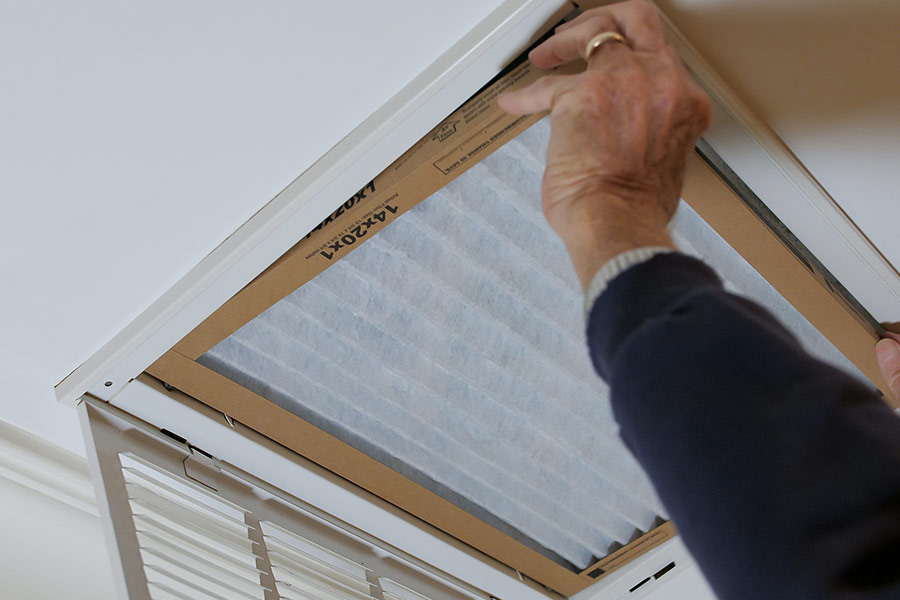
This is one of the most common findings in homes across Pittsburgh, and one of the simplest to address. When an air filter becomes heavily loaded with dust and debris, it restricts the airflow that the system depends on to function properly. The blower motor works harder to pull air through the blocked filter, energy consumption increases, and the reduced airflow across the evaporator coil can eventually cause the coil to ice over, which shuts the system down entirely.
Most manufacturers recommend changing standard 1-inch filters every 30 to 90 days depending on household conditions. Homes with pets, older ductwork, or dusty environments may need more frequent changes. Staying current on AC and furnace air filter replacement is one of the lowest-cost, highest-impact maintenance habits a homeowner can develop.
3. The Evaporator or Condenser Coils Are Dirty
Your air conditioner relies on two coil assemblies to transfer heat: the evaporator coil located inside the air handler and the condenser coil housed in the outdoor unit. Both coils need to make efficient contact with either air or refrigerant to do their job. When those surfaces become coated with dust, dirt, or debris, the system’s ability to transfer heat is reduced, and it has to run longer to compensate.
Dirty condenser coils are particularly common in Pittsburgh homes where outdoor units are surrounded by landscaping, positioned near dryer vents, or in areas where cottonwood and pollen accumulate heavily in the spring and summer. A thorough AC coil cleaning performed by a technician restores heat transfer efficiency and can meaningfully reduce operating costs.
4. Your Home Has Air Leaks and Poor Insulation
An air conditioner can only control the temperature of the air it is able to reach. If conditioned air is escaping through gaps around windows, doors, recessed lights, or attic hatches, the system has to run continuously to make up the difference. In Pittsburgh, where older homes in areas like Dormont, Brookline, and Beechview were built long before modern energy codes, air sealing and insulation deficiencies are extremely common.
Poor attic insulation is one of the biggest contributors to high summer energy bills. Heat accumulates in an underinsulated attic and radiates down into the living space throughout the day, adding a constant heat load that your air conditioner must continuously offset. A home energy audit can identify where the biggest losses are occurring and prioritize the improvements that will have the most impact on cooling costs.
5. Your Thermostat Settings Are Working Against You
How and when your thermostat calls for cooling has a significant effect on your monthly bill. A system set to a constant low temperature runs nearly continuously during the hottest parts of the day, which is both expensive and hard on the equipment. Allowing the temperature to rise slightly during hours when the home is unoccupied and then recovering to a comfortable setpoint before the household returns is a straightforward way to reduce runtime without sacrificing comfort.
Programmable and smart thermostats make this approach much easier to implement consistently. If your home still uses a manual thermostat, upgrading to a programmable model gives you the ability to create a cooling schedule that aligns with your household’s routine and reduces unnecessary runtime during the day. A technician can recommend compatible options for your specific system.
6. Ductwork Leaks Are Sending Conditioned Air Into Unconditioned Spaces
In homes with forced-air systems, the ductwork network is responsible for delivering cooled air to every room. When ducts develop cracks, gaps at connections, or separations in the joints, a portion of that conditioned air never reaches the living space. Instead, it leaks into attics, crawl spaces, wall cavities, and basements, none of which benefit from the cooling and all of which represent wasted energy.
Research consistently shows that leaky ductwork can reduce system efficiency by 20 to 30 percent or more. Based on what we see in Pittsburgh properties, especially in homes where ductwork has never been inspected or sealed, duct leakage is frequently one of the largest contributors to inflated cooling costs. HVAC ductwork repair performed by a qualified technician can locate and seal leaks, restoring the delivery efficiency that your system was designed to provide.
7. The System Is Undersized or Oversized for the Home
An air conditioner that is not properly matched to the size and characteristics of the home it serves will always struggle to maintain comfort efficiently. An undersized system runs nearly without stopping on hot days because it simply does not have enough capacity to meet the load, and the extended runtime drives up energy costs. An oversized system short-cycles, meaning it reaches the thermostat setpoint quickly and shuts off before it has had a chance to properly dehumidify the space, leading to a home that feels clammy and causes the system to cycle on and off repeatedly.
Either scenario results in higher energy bills than a properly sized system would produce. If your system is more than 15 years old or was installed without a proper load calculation, there is a reasonable chance it is not correctly sized for your home. A licensed technician can evaluate your current equipment and help determine whether a properly matched AC installation or replacement would improve both comfort and efficiency.
8. Humidity Is Making Your System Work Overtime
Pittsburgh summers are defined as much by humidity as by heat. The region’s geography along the Ohio, Allegheny, and Monongahela Rivers contributes to consistently high relative humidity levels throughout June, July, and August. Humidity makes the air feel warmer than it actually is, which leads occupants to push thermostats lower in search of comfort. The lower the setpoint, the longer the system runs, and the higher the bill climbs.
A properly functioning air conditioner removes moisture from the air as part of the cooling process, but in some homes the humidity load simply exceeds what the AC system alone can manage. In those situations, a whole-home dehumidifier working alongside the HVAC system can significantly reduce the burden on the air conditioner, allowing it to maintain comfort at higher temperature setpoints and run less frequently as a result.
Keeping Energy Costs Under Control in Pittsburgh
High summer energy bills are rarely the result of a single problem. In most of the Pittsburgh homes we service, two or three of the issues described above are present at the same time, and together they add up to meaningful inefficiency. The good news is that most of these causes are correctable.
At Spurk HVAC, we have spent since 2018 helping Pittsburgh homeowners get more out of their cooling systems. Whether the issue is equipment performance, ductwork integrity, or filtration, our licensed technicians diagnose the root cause and recommend solutions that make a real difference in comfort and cost. To find out what is driving up your summer energy bills, contact our team today and schedule a visit from one of our experienced technicians.